




Why Are Platinum Coated Titanium Electrodes Highly Favored?
In the field of electrochemistry, platinum-coated titanium electrodes are reshaping industry landscapes with their exceptional performance and wide range of applications. This composite material, combining the structural strength of titanium with the catalytic activity of platinum, has become the preferred electrode solution for numerous industrial and research applications.
Material Characteristics: A Dual Advantage Combination
Platinum-coated titanium electrodes feature a unique dual-layer structure design:
Substrate Material
Made from industrial pure titanium (Gr1/Gr2).
Exhibits excellent mechanical strength (tensile strength ≥240 MPa).
Density only 57% that of steel, enabling lightweight design.
Natural passivation film ensures corrosion resistance in pH 1-12 environments.
Platinum Coating Technology
Forms a 2–8 μm coating via electroplating or physical vapor deposition.
Platinum purity ≥99.95%.
Surface roughness Ra <0.5 μm, ensuring uniform catalytic activity.
Adhesion meets ASTM D3359 Grade 4B or higher standards.
This combination creates a synergistic effect: the titanium substrate provides a structural lifespan exceeding 20 years, while the platinum coating ensures efficient and durable electrocatalytic performance.

Performance Advantage Comparative Analysis
| Performance Metric | Platinum-Coated Titanium Electrodes | Traditional Graphite Electrodes | Stainless Steel Electrodes |
|---|---|---|---|
| Service Life | 8–15 years | 1–3 years | 3–5 years |
| Current Density | ≤8000 A/m² | ≤500 A/m² | ≤2000 A/m² |
| Overpotential | O₂ evolution: 1.45V, Cl₂ evolution: 1.13V | High and unstable | Moderate |
| Maintenance Frequency | Coating inspection every 2 years | Replacement every 6 months | Annual inspection |
| Environmental Friendliness | No leaching pollution | Carbon particle pollution | Metal ion leaching |
Application Areas
Water Treatment Industry
Electrochemical Advanced Oxidation: In-situ generation of hydroxyl radicals to degrade refractory organic compounds.
Electrolytic Disinfection: Sodium hypochlorite generation, replacing hazardous chlorine gas storage.
Heavy Metal Removal: Recovery of metal ions such as copper and nickel via electrodeposition.
New Energy Sector
PEM Electrolyzers: Serves as oxygen evolution anode with efficiency >85%.
Fuel Cells: Catalyst layer or gas diffusion layer substrate.
CO₂ Electroreduction: High-selectivity production of carbon monoxide or formic acid.
Electronics and Precision Manufacturing
PCB Electroplating: Gold, rhodium, and other precious metal plating with thickness deviation <5%.
Microelectromechanical Systems (MEMS): Microelectrode array fabrication.
Semiconductor Packaging: Lead frame electroplating.
Biomedical Applications
Implantable Electrodes: Neural stimulation and signal acquisition.
Biosensors: Electrochemical detection platforms.
Medical Device Disinfection: Electrochemical cleaning of endoscopes and other instruments.
Chemical and Pharmaceutical Industries
Organic Electrosynthesis: Selective oxidation and reduction reactions.
Pharmaceutical Intermediate Preparation: Fine synthesis under mild conditions.
Catalyst Recovery: Electrochemical recovery of precious metal catalysts.
Technological Innovation Directions
Coating Process Optimization
Pulsed Electroplating Technology: Improves coating density and adhesion.
Gradient Coating Design: Gradual composition transition from titanium substrate to surface.
Nanostructured Coatings: Increases specific surface area by 3–5 times.
Material System Expansion
Platinum Alloy Coatings: Pt-Ir, Pt-Ru enhance selectivity for specific reactions.
Multilayer Composite Structures: Intermediate transition layers improve thermal stress matching.
Smart Responsive Coatings: Adjust performance based on potential or pH changes.
System Integration Innovations
Embedded Sensors: Real-time monitoring of coating status.
Modular Design: Facilitates quick replacement and maintenance.
Digital Twin Systems: Predict performance degradation and optimize operating parameters.
Economic Benefit Analysis
Although platinum-coated titanium electrodes require higher initial investment (approximately 2–3 times that of traditional electrodes), their total lifecycle cost advantages are significant:
Direct Benefits
Energy consumption reduced by 15–30%.
Maintenance costs lowered by 60–80%.
Downtime shortened by 50%.
Indirect Benefits
Product qualification rate improved by 2–5%.
Environmental compliance costs reduced.
Brand value enhanced.
Typical Return on Investment
Example: Industrial wastewater treatment plant processing 1000 tons per day:
Additional equipment investment: Approximately ¥500,000.
Annual operational cost savings: Electricity ¥120,000 + Chemicals ¥80,000 + Maintenance ¥50,000.
Payback period: 1.8–2.5 years.
Selection and Usage Recommendations
Application Scenario Matching
Highly Corrosive Environments: Choose thick platinum layer (≥5 μm) designs.
High Current Density Applications: Use reinforced titanium substrates.
Precision Electroplating: Select high-purity platinum coatings (≥99.99%).
Installation and Maintenance
Ensure uniform current distribution.
Establish regular potential monitoring protocols.
Develop preventive maintenance plans.
Create an electrode performance database.
Quality Verification Standards
Coating Thickness Uniformity: Deviation <±10%.
Electrochemical Activity: Assessed via cyclic voltammetry testing.
Accelerated Life Testing: >1000 hours under 1M H₂SO₄, 1A/cm² conditions.
Future
With the advancement of green manufacturing and smart manufacturing, platinum-coated titanium electrodes will evolve toward greater efficiency, intelligence, and sustainability. The integration of new material technologies, digital monitoring, and recycling systems will enable these electrodes to play an even greater role in energy transition and environmental protection.
BAOJI NINGHAO INDUSTRY AND TRADE CO., LTD. provides customized development services for platinum-coated titanium electrodes, offering complete electrode solutions from material selection and structural design to process validation. For detailed technical information or application discussions, please contact: sales02@nh-ti.com.
References
International Journal of Hydrogen Energy. (2023). Performance and durability of Pt-coated Ti anodes in PEM water electrolysis.
Electrochimica Acta. (2022). Advanced coating technologies for platinum-based electrodes in electrochemical applications.
Journal of Applied Electrochemistry. (2023). Economic analysis of platinum-coated titanium electrodes in industrial electroplating.
ACS Sustainable Chemistry & Engineering. (2022). Life cycle assessment and recycling strategies for platinum-based electrochemical electrodes.
YOU MAY LIKE
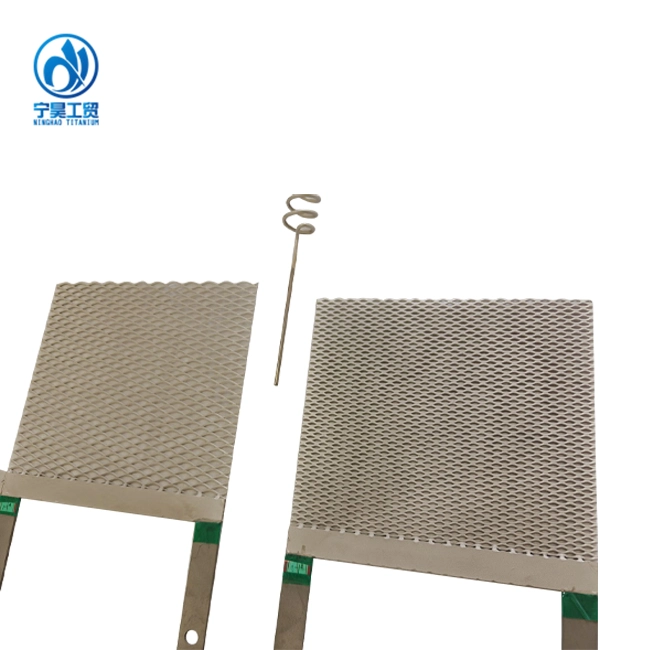 VIEW MORETitanium platinum-plated electrode for electrolysis of hydrogen-rich water
_1755851444116.webp) VIEW MOREiccp mmo coated titanium anodes
VIEW MOREiccp mmo coated titanium anodes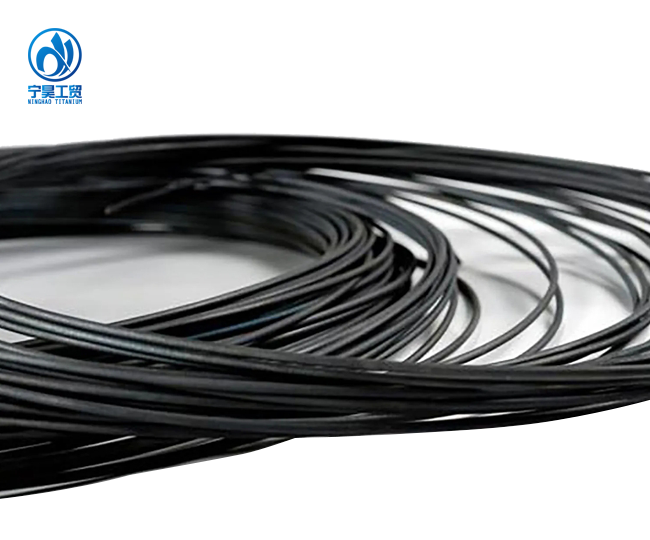 VIEW MOREMMO titanium wire anode
_1767772153491.webp) VIEW MOREtitanium electrodes in electrolysis
VIEW MOREtitanium electrodes in electrolysis_1767769923289.webp) VIEW MOREtitanium electrodes for water ionizer
VIEW MOREtitanium electrodes for water ionizer_1770023968475.webp) VIEW MORElridium Coated Titanium Anode for PCB Reverse Pulse Copper Plating
VIEW MORElridium Coated Titanium Anode for PCB Reverse Pulse Copper Plating_1755238003946.webp) VIEW MORETitanium electrodes for electrochemical water treatment
VIEW MORETitanium electrodes for electrochemical water treatment_1768550156531.webp) VIEW MORERuthenium Oxide Titanium Anode for Paper WastewaterElectrochemical Treatment
VIEW MORERuthenium Oxide Titanium Anode for Paper WastewaterElectrochemical Treatment