




Titanium Electrodes: The Superior Choice for Corrosion-Resistant Electrochemical Processes
In the field of electrochemistry, the selection of electrode materials plays a decisive role in process efficiency, operational lifespan, and overall effectiveness. Among various available materials, titanium electrodes have become the preferred solution for corrosion-resistant electrochemical applications. This article delves into why titanium electrodes hold such a crucial position in modern industry and analyzes their unique material characteristics.
Corrosion Resistance of Titanium Electrodes
The high regard for titanium electrodes in the electrochemical industry stems from their excellent corrosion resistance. When titanium is exposed to oxygen-containing environments, a dense and stable oxide film spontaneously forms on its surface. This naturally formed protective layer effectively isolates the base metal from corrosive media.
Technical Characteristics:
Passivation Film Stability: Remains stable within a pH range of 1–12.
Chloride Ion Resistance: Can operate long-term in chloride ion concentrations up to 200 g/L.
Temperature Adaptability: Operating temperature range from -40°C to 300°C.
Stress Corrosion Resistance: Maintains structural integrity under alternating loads.
Industrial Application Advantages:
In harsh operating conditions such as chlor-alkali production, electroplating wastewater treatment, and acid etching, the durability of titanium electrodes brings:
Equipment lifespan extended by 3–5 times.
Maintenance frequency reduced by 60–80%.
Significant reduction in product contamination risks.
Customization Capabilities: Meeting Diverse Process Needs
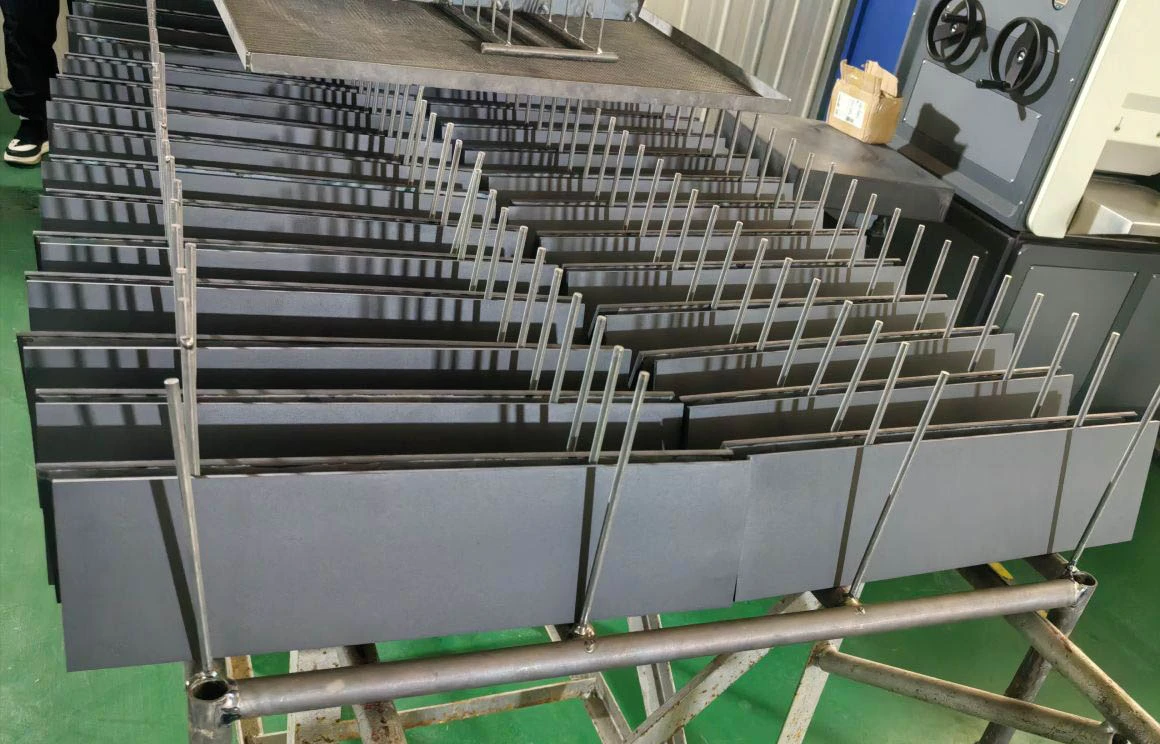
Another core advantage of titanium electrodes lies in their excellent customizability. The titanium substrate serves as an ideal carrier, enabling functional design through surface modification technologies:
Coating Technology Solutions:
| Coating Type | Main Components | Application Scenarios | Expected Lifespan |
|---|---|---|---|
| MMO Coating | RuO₂-IrO₂-TiO₂ | Chlor-alkali industry, electrochlorination | 8–12 years |
| Platinum Coating | Pt (99.95%+) | Precious metal electroplating, PEM electrolysis | 10–15 years |
| Special Alloy Coating | Pt-Ir, Pt-Ru | Specific catalytic reactions | 6–10 years |
Structural Design Flexibility:
Mesh Electrodes: Increase effective surface area by 30–50%, improving mass transfer efficiency.
Porous Electrodes: Controllable porosity to adapt to different fluid dynamics conditions.
Composite Structures: Gradient density design to optimize current distribution.
Practical Application Case:
After a chemical plant replaced traditional graphite anodes with titanium-based MMO electrodes:
Energy consumption reduced by 18%.
Annual maintenance costs decreased by 45%.
Product purity improved from 99.5% to 99.9%.
Full Lifecycle Economic Benefit Analysis
Cost Structure Comparison:
| Cost Item | Titanium Electrodes | Traditional Graphite Electrodes | Stainless Steel Electrodes |
|---|---|---|---|
| Initial Investment | Higher | Low | Medium |
| Annual Maintenance Cost | Low (<5% of initial cost) | High (20–30%) | Medium (10–15%) |
| Replacement Cycle | 8–15 years | 1–3 years | 3–5 years |
| Energy Consumption Level | Low | High | Medium |
| 5 Year Total Cost | Lowest | Highest | Medium |
Indirect Benefits:
Reduced production stoppage losses: Enhanced equipment reliability ensures continuous production.
Quality stability: Consistent electrode performance ensures stable product quality.
Environmental compliance: Meets increasingly stringent emission standards.
Sustainable Development Advantages
Resource Utilization Efficiency:
Material Recyclability: Titanium electrode recovery rate can exceed 95%.
Energy Consumption Optimization: High-efficiency design reduces energy consumption per unit of product.
Chemical Usage Reduction: Decreases maintenance chemical consumption such as acid and alkali cleaning.
Environmentally Friendly Characteristics:
No heavy metal leaching pollution.
Reduced solid waste generation.
Supports carbon reduction goals.
Technological Development Trends
Intelligent Electrode Systems:
Integrated sensing functions: Real-time monitoring of electrode status.
Adaptive control: Automatically optimizes operating parameters based on process conditions.
Predictive maintenance: Predicts remaining lifespan based on data analysis.
New Material Development:
Low-platinum/platinum-free catalytic systems.
Self-healing coating technologies.
Superhydrophobic surface treatments.
Application Area Expansion:
New Energy: Large-scale energy storage systems.
Environmental Protection: Electrochemical degradation of emerging pollutants.
Bioengineering: Medical implant electrodes.
Selection and Implementation Recommendations
Key Points for Needs Assessment:
Medium characteristic analysis: pH, temperature, ion composition, oxidative properties.
Process parameter determination: Current density, voltage range, production capacity requirements.
Lifespan expectations: Set reasonable targets based on investment plans.
Supplier Selection Criteria:
Coating process maturity.
Completeness of quality control systems.
Technical support capabilities.
Reference to successful cases.
Implementation Steps:
Laboratory verification → 2. Pilot-scale evaluation → 3. Engineering scale-up → 4. Full implementation.
BAOJI NINGHAO INDUSTRY AND TRADE CO., LTD. provides comprehensive titanium electrode solutions, offering professional technical support from material selection and coating design to process optimization. Our titanium electrode products have been successfully applied in various fields such as chemicals, environmental protection, and new energy.
For more technical information or customized solution inquiries, please contact: sales02@nh-ti.com
References
1. International Organization for Standardization. (2023). ISO 18064: Titanium and titanium alloys — Anodes for electrochemical applications.
2. Journal of The Electrochemical Society. (2022). Long-term performance evaluation of titanium-based anodes in aggressive electrolytes.
3. Corrosion Science. (2023). Mechanisms of passive film formation and stability on titanium in electrochemical environments.
4. ACS Sustainable Chemistry & Engineering. (2022). Life cycle assessment of titanium electrodes in electrochemical processes.
YOU MAY LIKE
 VIEW MOREMMO titanium wire anode
- VIEW MOREgrade 2 titanium as anode
_1755236992436.webp) VIEW MOREtitanium anodes
VIEW MOREtitanium anodes_1755237315243.webp) VIEW MOREanodic coating titanium
VIEW MOREanodic coating titanium VIEW MORElridium-tantalum coated titanium anode for Copper Plating
_1770191266369.webp) VIEW MORETitanium Anode with lridium oxide for Chromium Plating
VIEW MORETitanium Anode with lridium oxide for Chromium Plating_1770280550569.webp) VIEW MOREElectrolysis of water to produce titanium hydrogen anode
VIEW MOREElectrolysis of water to produce titanium hydrogen anode_1768812199239.webp) VIEW MOREMMO Anode for Degradation and Decolorization
VIEW MOREMMO Anode for Degradation and Decolorization