




Comprehensive Comparative Analysis of Platinum Titanium Anodes vs Traditional Anode Materials
In the field of electrochemical industry, the selection of anode materials directly impacts process efficiency, energy consumption, and product quality. Platinum titanium anodes, with their unique material combination and performance advantages, demonstrate significant competitiveness in numerous application scenarios. This article provides an in-depth analysis of the technical differences and application value of platinum titanium anodes compared to traditional anode materials through systematic comparison.
Core Characteristics of Platinum Titanium Anodes
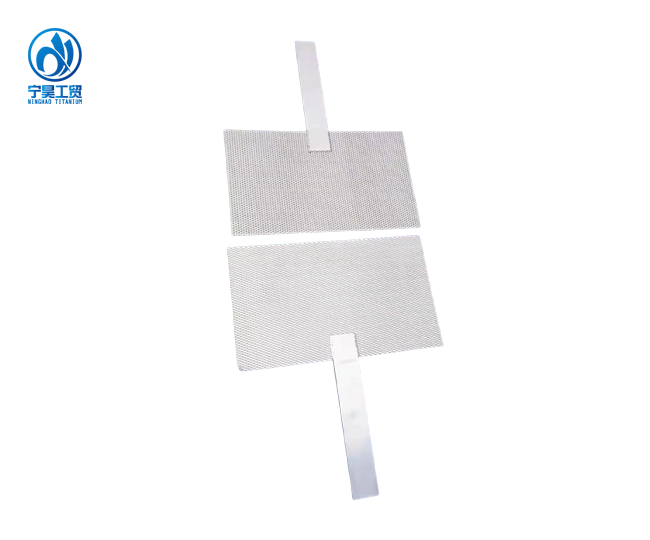
Platinum titanium anodes adopt a composite structure of "titanium substrate,platinum coating," combining the advantages of both materials:
| Characteristic | Technical Performance | Industrial Value |
|---|---|---|
| Corrosion Resistance | Gr1/Gr2 titanium substrate remains stable in pH 1‑12 and chloride-containing media; platinum coating does not dissolve in strong oxidizing environments | Suitable for harsh chemical environments; lifespan can reach 5‑8 years |
| Catalytic Activity | Platinum coating provides an excellent electrocatalytic interface, reducing oxygen/chlorine evolution overpotential by 15‑30% | Improves current efficiency and reduces unit energy consumption |
| Stability | High bonding strength between coating and substrate (adhesion ≥4B), resistant to thermal shock and mechanical impact | Reduces unplanned downtime and ensures continuous production |
| Conductivity | Substrate resistivity approximately 0.55 μΩ·m, combined with highly active coating for efficient electron transfer | Adapts to high current density conditions (≤8 kA/m²) |
Comparative Analysis with Mainstream Anode Materials
1. Platinum Titanium Anodes vs Graphite Anodes
Lifespan and Corrosion Resistance: Graphite annual loss rate can reach 10‑20 kg/m² in oxygen-containing acidic solutions; platinum-titanium anode annual loss <0.01 kg/m²
Product Purity: Graphite easily flakes off, producing carbon particles that contaminate the electrolyte; platinum-titanium anodes have no dissolution contamination
Application Scenarios: Graphite is commonly used in non-precision electrolysis (e.g., some metal electrowinning); platinum-titanium anodes are more suitable for high-purity product preparation (e.g., electronic-grade chemicals)
2. Platinum Titanium Anodes vs Lead Dioxide Anodes
| Comparison Dimension | Lead Dioxide Anodes | Platinum-Titanium Anodes |
|---|---|---|
| Environmental Friendliness | Risk of lead leaching (especially at low pH) | Fully inert material, compliant with RoHS/REACH |
| Operating Window | Suitable for acidic systems (pH <3) | Adapts to a wide pH range of 1‑12 |
| Energy Consumption Performance | Higher oxygen evolution overpotential (approx. +0.3 V) | Overpotential reduced by 20‑40% |
| Maintenance Requirements | Periodic recoating (1‑2 years) | Coating lifespan typically >5 years |
3. Platinum Titanium Anodes vs Dimensionally Stable Anodes (DSA)
Catalytic Specificity: DSA can optimize chlorine/oxygen evolution selectivity by adjusting IrO₂, RuO₂, TiO₂ ratios; platinum coatings have broader catalytic applicability
Cost Structure: DSA has lower raw material costs, but platinum-titanium anodes often offer advantages in total lifecycle costs due to extended lifespan (+30‑50%)
Special Applications: DSA performs excellently in the chlor-alkali industry; platinum-titanium anodes are more favored in high-value-added electroplating and precision electrolysis

Analysis of Key Application Scenarios
1. High Purity Chemical Production
Electronic Grade Hydrofluoric Acid Electrolysis: Platinum-titanium anodes prevent metal contamination, ensuring semiconductor-grade product purity
High Purity Metal Electrowinning: Used for refining battery metals such as cobalt and nickel; anode stability directly affects product impurity content
2. High End Surface Treatment
Precious Metal Electroplating: Provides uniform current distribution (extreme difference <5%) in gold and rhodium plating
Precision Electronic Electroplating: Suitable for applications requiring high uniformity, such as PCB microvia copper plating and IC substrate gold plating
3. Advanced Oxidation Water Treatment
In Situ Oxidant Generation: Electrolytic production of hydroxyl radicals, ozone, etc., for treating refractory organic compounds
Electrode Anti-Fouling: Platinum surface has stronger resistance to organic adsorption than DSA, reducing cleaning frequency
4. Emerging Energy Fields
PEM Water Electrolysis for Hydrogen Production: Serves as oxygen evolution anode, maintaining stability in strongly acidic environments
Fuel Cells: Can serve as catalyst support or bipolar plate coating material
Selection Decision Framework
Selection evaluation is recommended based on the following dimensions:
Process Parameters: Electrolyte composition, temperature, pH, target current density
Product Requirements: Purity standards, surface quality, reaction selectivity
Economic Analysis: Initial investment, energy cost, maintenance cycle, total lifecycle cost
Compliance Requirements: Environmental regulations, industry standards, product certifications
Supply Chain Considerations: Material availability, technical support capability, customization services
Technological Development Trends
Low-Platinum/Platinum-Free: Development of low-cost, high-activity alternative materials such as platinum‑transition metal alloys and core‑shell structures
Intelligent Electrodes: Integration of temperature, potential, and coating wear sensing functions
Repairable Coatings: Extended lifespan through self-healing materials or electrochemical reactivation technologies
Computational Materials‑Assisted Design: Predicting coating structure‑performance relationships through simulation
Conclusion
Platinum titanium anodes offer irreplaceable advantages in high corrosion, high purity, and high value added electrochemical applications. Although the initial investment is higher, their comprehensive value in energy efficiency, lifespan, and product quality often results in superior total lifecycle economics. With advancements in material technology and manufacturing process optimization, the application boundaries of platinum-titanium anodes will continue to expand, providing critical material support for the green electrochemical industry.
BAOJI NINGHAO INDUSTRY AND TRADE CO., LTD. offers customized development and process adaptation services for platinum-titanium anodes, covering material selection, structural design, performance testing, and technical training support. For detailed technical information or application solution discussions, please contact: sales02@nh-ti.com
References
1. International Electrochemical Society. (2023). Performance Benchmarking of Industrial Anodes: Technical Report (IES‑TR‑2023‑07).
2. Wang, L., et al. (2022). Life Cycle Cost Analysis of Platinum‑Titanium vs. Traditional Anodes in Chlor‑Alkali Industry. Journal of Cleaner Production, 380, 135102.
3. European Federation of Corrosion. (2021). Guidelines for Anode Selection in Aggressive Electrochemical Environments (EFC Publication No. 79).
4. Zhang, H., & Chen, G. (2023). Advanced Coating Architectures for Enhanced Catalytic Stability in Platinum‑based Anodes. ACS Applied Materials & Interfaces, 15(28), 34012‑34025.
YOU MAY LIKE
_1755236711229.webp) VIEW MOREMMO Ti flexible anode
VIEW MOREMMO Ti flexible anode_1755237068019.webp) VIEW MOREmmo titanium anode
VIEW MOREmmo titanium anode_1755237122959.webp) VIEW MOREmixed metal oxide coated titanium anodes
VIEW MOREmixed metal oxide coated titanium anodes_1755237342167.webp) VIEW MOREmmo coated titanium anodes
VIEW MOREmmo coated titanium anodes_1768295869605.webp) VIEW MORETitanium Anode with MMO coating for Copper Electrowinning Cell
VIEW MORETitanium Anode with MMO coating for Copper Electrowinning Cell_1769412393846.webp) VIEW MOREPlatinum Titanium Plates electrode for Water lonizerElectrolysis
VIEW MOREPlatinum Titanium Plates electrode for Water lonizerElectrolysis_1768809598553.webp) VIEW MOREMMO Anode for Ammonia Removal
VIEW MOREMMO Anode for Ammonia Removal VIEW MOREMMO Ribbon anode