




Titanium Electrodes for Electrolysis: Durability, Efficiency, and Corrosion Resistance
With the rapid advancement of electrochemical technology, titanium electrodes have become indispensable components in many industrial sectors. From water treatment to metal recovery, these electrodes provide reliable solutions for modern industry with their unique combination of properties—excellent durability, high operational efficiency, and outstanding corrosion resistance. This article explores the core role of titanium electrodes in electrolysis processes and their impact across various industries.
The Technical Core of Titanium Electrodes
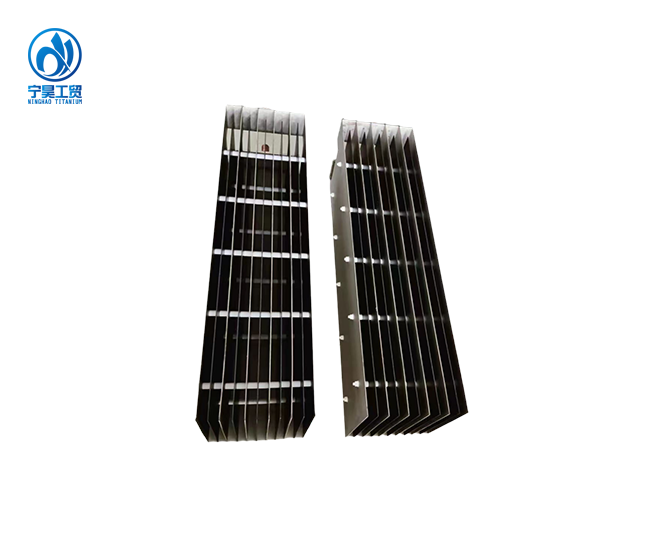
Electrolysis titanium electrodes use high-purity titanium as the substrate material, coated with advanced layers such as Mixed Metal Oxides (MMO). The titanium substrate offers three key advantages: a high strength-to-weight ratio, excellent corrosion resistance, and good biocompatibility, making it an ideal choice for electrolysis environments. MMO coatings (typically containing precious metal oxides such as iridium and ruthenium) significantly enhance the electrode's electrochemical activity and resistance to passivation.
Compared to traditional graphite or lead-based electrodes, titanium electrodes demonstrate significantly better stability in strong acid or alkali solutions, resisting dissolution or deformation. This characteristic directly translates to longer service life and lower maintenance frequency, providing substantial economic benefits for industries requiring continuous production.
Main Application Areas Overview
| Industry Sector | Specific Application | Advantages of Titanium Electrodes |
|---|---|---|
| Water Treatment | On-site sodium hypochlorite generation | Chlorine corrosion resistance, suitable for long-term continuous operation |
| Metal Surface Treatment | Electroplating, anodizing | Uniform current distribution, high coating quality |
| Chlor-Alkali Industry | Chlorine, caustic soda, hydrogen production | High current efficiency, significant energy savings |
| Electronics Manufacturing | PCB electroless plating | High precision, suitable for complex circuit boards |
| Environmental Technology | Wastewater treatment, hydrogen production | Good stability, no secondary pollution |
Technological Innovations and Development Directions
Breakthroughs in Coating Technology
One current research focus is the development of nanostructured MMO coatings. By controlling the coating particle size at the nanometer level, the specific surface area of the electrode can be increased several times, providing more catalytic active sites. This means lower overpotential and less energy consumption at the same current density. Laboratory data shows that nanostructured coatings can reduce oxygen evolution reaction overpotential by 15-20%.
The Rise of Smart Electrodes
Another important trend is the integration of titanium electrodes with IoT technology. By embedding micro-sensors within the electrode structure, real-time monitoring of electrode potential changes, temperature distribution, and coating wear status becomes possible. This data is transmitted wirelessly to central control systems, allowing operators to adjust process parameters promptly and schedule maintenance before electrode performance significantly degrades, enabling predictive maintenance and avoiding unexpected shutdowns.
New Role in Green Manufacturing
In the context of global carbon neutrality, the application of titanium electrodes in water electrolysis for hydrogen production has attracted widespread attention. In Proton Exchange Membrane (PEM) electrolyzers, titanium electrodes serve as anode materials, and their corrosion resistance and catalytic activity directly affect hydrogen production efficiency and equipment lifespan. Additionally, titanium electrodes are playing an active role in environmental technologies such as electrochemical carbon capture and treatment of high-concentration organic wastewater.
Common Issues and Selection Recommendations
For different operating conditions, consider the following when selecting:
High Chlorine Environments: Priority to ruthenium-iridium coatings, which offer better chlorine corrosion resistance
Strong Acid Electrolysis: Iridium-tantalum coatings are recommended for higher stability
High-Precision Electroplating: Choose platinum coatings for more uniform current distribution
Cost-Sensitive Projects: MMO coatings offer a good balance between performance and economy
Conclusion and Outlook
Titanium electrodes, with their excellent durability, efficiency, and corrosion resistance, are redefining standards in the electrochemical industry. With continuous breakthroughs in coating technology and increasing levels of intelligence, these electrodes will play even greater roles in emerging fields such as hydrogen production, resource recovery, and environmental management. For enterprises, selecting the right titanium electrode is not only key to ensuring production stability but also an important pathway to achieving energy savings, emission reduction, and enhanced competitiveness.
For professional selection recommendations tailored to your specific processes, please contact BAOJI NINGHAO INDUSTRY AND TRADE CO., LTD. Our technical team provides free consultation and sample testing services: sales02@nh-ti.com
References
1. Chen, X., & Mao, S. S. (2007). Titanium dioxide nanomaterials: synthesis, properties, modifications, and applications. Chemical reviews, 107(7), 2891-2959.
2. Kraft, A. (2007). Doped diamond: a compact review on a new, versatile electrode material. International Journal of Electrochemical Science, 2(5), 355-385.
3. Martínez-Huitle, C. A., & Ferro, S. (2006). Electrochemical oxidation of organic pollutants for the wastewater treatment: direct and indirect processes. Chemical Society Reviews, 35(12), 1324-1340.
4. Panizza, M., & Cerisola, G. (2009). Direct and mediated anodic oxidation of organic pollutants. Chemical reviews, 109(12), 6541-6569.
5. Trasatti, S. (2000). Electrocatalysis: understanding the success of DSA®. Electrochimica Acta, 45(15-16), 2377-2385.