




Titanium Anodes: The Technological Engine Empowering Green Extraction of Non-Ferrous Metals
Titanium Anodes: The Technological Engine Empowering Green Extraction of Non-Ferrous Metals
Against the global backdrop of pursuing sustainable development, the non-ferrous metal extraction industry faces multiple challenges: declining ore grades, tightening environmental regulations, and rising energy costs. Within traditional electrolytic processes, the performance limitations of anode materials have become a critical bottleneck constraining industrial advancement. Titanium anodes, as a revolutionary material in the electrochemical industry, are leading hydrometallurgical technology for non-ferrous metals towards a new era of high efficiency and low carbon emissions, thanks to their exceptional corrosion resistance, superior electrode stability, and significant economic and environmental benefits.
Industry Pain Points and the Titanium Anode Solution
Traditional lead-based and graphite anodes, used in leaching systems with strong acids, high fluorides, or chlorides, commonly suffer from issues such as dissolution contaminating the electrolyte, rapid wear, high cell voltage, substantial energy consumption, and contamination of cathode products. Titanium anodes, particularly Mixed Metal Oxide (MMO) coated titanium anodes and Platinum Group Metal (PGM) coated titanium anodes, offer a fundamental solution through their "inert" electrode characteristics:
1. Corrosion Resistance: The titanium substrate itself forms a dense oxide film. Combined with precious metal oxide catalytic coatings, it maintains long-term stability even in mixed media containing sulfuric acid, hydrochloric acid, or hydrofluoric acid. This fundamentally prevents contamination of the electrolyte by the anode material, ensuring the highest purity of cathode metals (e.g., copper, nickel, cobalt, zinc).
2. Energy Saving and Consumption Reduction: Their excellent electrocatalytic activity significantly reduces the overpotential for oxygen and chlorine evolution reactions. Compared to traditional anodes, cell voltage can be lowered by 15-30% at the same current density, translating directly into substantial electrical energy savings.
3. Enhanced Current Efficiency and Production Capacity: Stable dimensional structure and uniform current distribution ensure high current efficiency in the electrolysis process (typically >95%) and allow stable operation at higher current densities, thereby significantly increasing single-cell production capacity and overall efficiency.
4. Green Production: Eliminates the introduction and emission of toxic heavy metals like lead into the production chain. Electrolysis residues are easier to process and recycle, perfectly aligning with increasingly stringent environmental regulations and circular economy requirements.
Application
| Metal Type | Typical Process | Recommended Titanium Anode Type |
Copper | Sulfate System Electrorefining & Electrowinning | IrO₂-Ta₂O₅ coated MMO Anode |
Nickel/Cobalt | Chloride or Sulfate System Electrowinning | RuO₂-IrO₂ coated MMO Anode Platinum-coated Titanium Anode |
| Zinc | Sulfate System Electrowinning | PbO₂-coated Titanium Anode Advanced MMO Anode |
| Manganese | Sulfate System Electrowinning | MnO₂-coated Titanium Anode Specially Formulated MMO Anod |
| Precious Metals (Gold, Silver) | Cyanide or Thiourea System Electrorefining | Platinum-coated Titanium Anode High-Iridium coated MMO Anode |

Technical Selection and System Optimization Recommendations
1. Precise Selection: The choice of coating system (ruthenium-based, iridium-based, platinum-based, or mixtures) and anode structure (plate, mesh, basket) must be scientifically determined based on specific electrolyte composition, temperature, current density, and product purity requirements.2. Power Supply Matching: The low-resistance characteristics of titanium anodes require matching with high-performance thyristor or switching power supply rectifiers to maximize electrical energy utilization.
3. Smart Operation & Maintenance: Integrating online monitoring systems for cell voltage and anode potential allows real-time assessment of coating health, enabling predictive maintenance and further extending anode lifespan.
Conclusion
Titanium anodes are no longer merely "consumables" but are core technological assets for cost reduction, efficiency improvement, quality enhancement, and green transformation. The lifecycle cost advantages and strategic value they deliver are making them the standard configuration for leading global smelting enterprises.
BAOJI NINGHAO INDUSTRY AND TRADE CO., LTD. specializes in the R&D and manufacturing of titanium anodes, providing comprehensive solutions for various non-ferrous metal hydrometallurgical projects. We are committed to empowering our clients to achieve resource efficiency and a sustainable future through advanced electrode technology.
Contact us at sales02@nh-ti.com for consultation.
References
1. Chen, G., & Tong, Y. (2022). "Advanced Anode Materials for Energy-Efficient Electrowinning of Non-Ferrous Metals." Journal of The Electrochemical Society, 169(4), 043502.
2. Wang, L., et al. (2021). "Long-term Performance of IrO₂-Ta₂O₅ Coated Titanium Anodes in Copper Electrowinning." Hydrometallurgy, 205, 105742.
3. International Copper Study Group. (2023). The Future of Copper Extraction: Technological Trends and Sustainability.
4. Zhang, W., et al. (2020). "MMO Coated Ti Anodes for Zinc Electrowinning: Corrosion Mechanism and Performance Optimization." Corrosion Science, 177, 108998.
5. "Innovations in Hydrometallurgy: The Role of Dimensionally Stable Anodes." (2023). Journal of Sustainable Metallurgy, 9(1), 45-60.
6. Ninghao Industry. (2024). Technical White Paper: Titanium Anode Solutions for Nickel-Cobalt Extraction. BAOJI NINGHAO INDUSTRY AND TRADE CO., LTD.
7. European Commission. (2022). Best Available Techniques (BAT) Reference Document for the Non-Ferrous Metals Industries.
YOU MAY LIKE
_1755236611966.webp) VIEW MORETitanium Electrode for Electrochemical Oxidation
VIEW MORETitanium Electrode for Electrochemical Oxidation_1755236491406.webp) VIEW MORETitanium anode plate for electrodeposition of non-ferrous metals
VIEW MORETitanium anode plate for electrodeposition of non-ferrous metals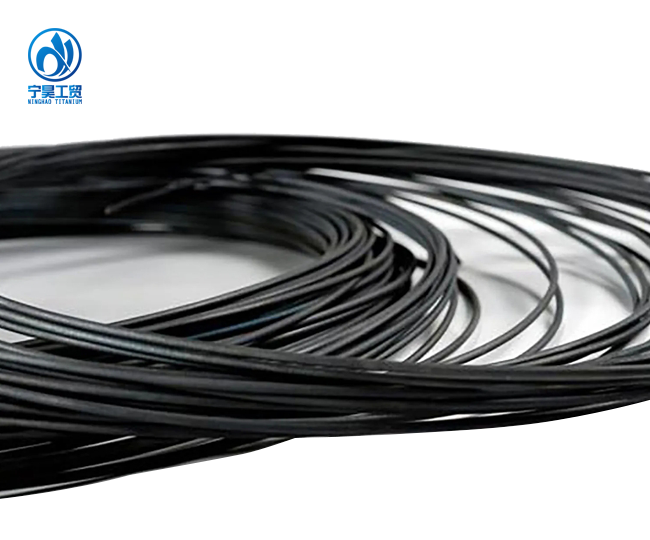 VIEW MOREMMO titanium wire anode
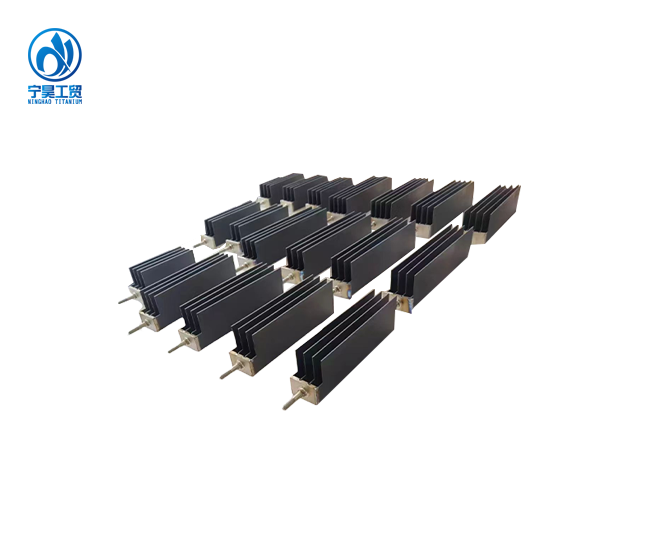 VIEW MORESelf clean salt chlorine generator for pool
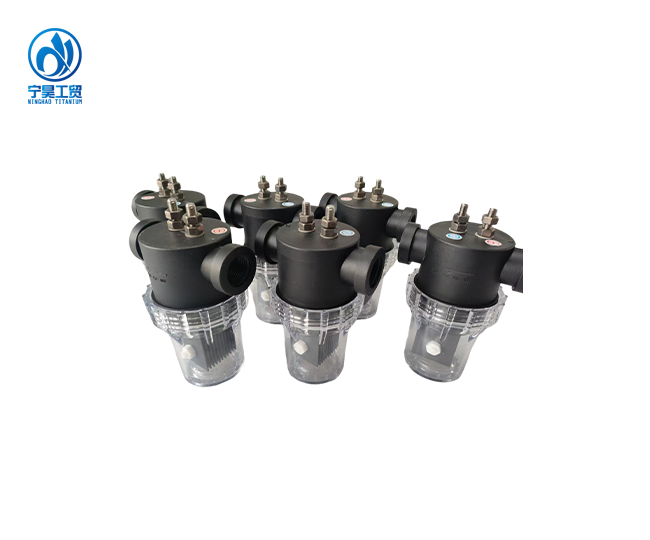 VIEW MOREElectrolysis water hydrogen production electrolyzer
_1770023968475.webp) VIEW MORElridium Coated Titanium Anode for PCB Reverse Pulse Copper Plating
VIEW MORElridium Coated Titanium Anode for PCB Reverse Pulse Copper Plating VIEW MORElridium-tantalum coated titanium anode for Copper Plating
_1768534006149.webp) VIEW MOREMMO(Ru02) Coated Titanium Electrode for Degradationand Decolorization
VIEW MOREMMO(Ru02) Coated Titanium Electrode for Degradationand Decolorization