




The Future of Titanium Alloy Electrodes
As electrochemical technology continues to advance rapidly, titanium alloy electrodes are expanding their application boundaries in efficiency, durability, and sustainability. From water treatment to energy storage, this key material is poised to play an increasingly important role across various industrial sectors.
Innovative Coatings: New Directions for Performance Enhancement
The performance advancement of titanium alloy electrodes is closely tied to the development of coating technologies. With ongoing progress in materials science, electrode coatings are evolving toward greater efficiency and durability.
Nanostructured coatings represent a significant area of current research. These ultra-thin coatings, just a few atomic layers thick, can significantly improve the electrochemical properties of titanium alloy electrodes. The application of nanomaterials such as carbon nanotubes and graphene can substantially increase the effective surface area of electrodes, thereby enhancing catalytic activity, improving current density distribution, and ultimately boosting overall efficiency.
Novel mixed metal oxide coatings continue to be an active area of development. Traditional coating materials seek to balance conductivity, stability, and catalytic activity, while new coating systems aim to further optimize these performance metrics, enabling electrodes to maintain stable operation at higher current densities.
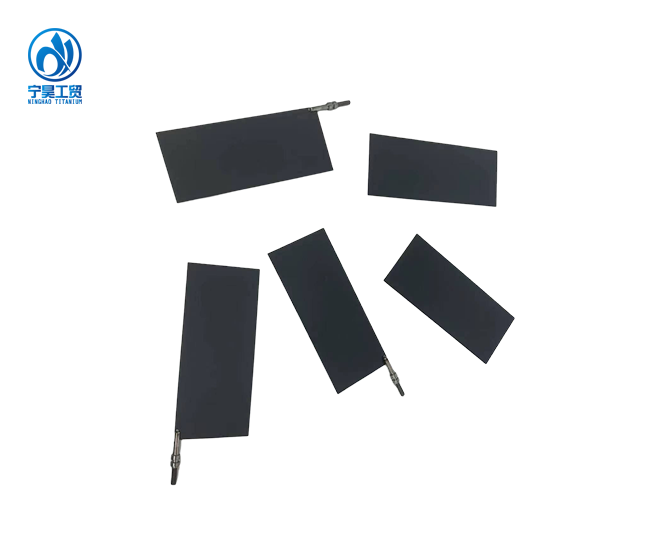
Self-healing coatings represent another noteworthy technology. These smart materials can automatically detect and repair minor damage, extending the service life of electrodes. As related technologies mature, electrodes with self-healing capabilities are expected to further reduce maintenance costs and unplanned downtime in industrial applications.
Smart Electrodes: Integration of Sensing and IoT
The combination of smart technologies with titanium alloy electrodes is transforming how electrochemical processes are monitored and controlled. The next generation of smart electrodes will integrate various sensors and Internet of Things capabilities, enabling real-time monitoring of electrolysis processes.
Smart electrodes can incorporate sensors capable of monitoring parameters such as pH, temperature, current density, and even specific ion concentrations in real time. This data provides valuable reference points for optimizing process efficiency and ensuring product quality. Through connectivity with central control systems or cloud platforms, smart electrodes enable remote monitoring and control, allowing operators to adjust parameters based on real-time data, improving production efficiency and reducing energy consumption.
Predictive maintenance represents another important application area for smart electrodes. By continuously monitoring their own performance status, smart electrodes can provide maintenance alerts before issues become critical, helping to reduce unexpected downtime and extend the overall service life of electrodes.
The proliferation of smart electrodes will also create opportunities for the application of machine learning and artificial intelligence in electrochemical processes. By analyzing the extensive data collected from smart electrodes, AI systems can automatically identify operating patterns and optimize parameters, playing an increasingly important role in efficiency improvement and product quality control.
Sustainable Manufacturing and Recycling
Against the backdrop of growing environmental awareness, the future development of titanium alloy electrodes is closely linked to sustainability. The environmental footprint of electrode manufacturing is becoming a focal point for the industry.
Manufacturing process optimization is progressing through more energy-efficient titanium extraction and alloying processes. Additive manufacturing (3D printing) is being increasingly applied in electrode production, enabling the fabrication of complex electrode structures with minimal material waste, contributing to reduced costs and environmental impact. At the same time, the application of renewable energy in manufacturing processes is gradually expanding.
Circular economy principles are growing in importance throughout the lifecycle of titanium alloy electrodes. When electrodes reach the end of their service life, advanced recycling technologies can recover valuable materials, reducing waste generation while decreasing demand for virgin raw materials.
Electrode designs that facilitate easy disassembly and recycling are becoming a research focus. Modular designs that simplify the separation of various electrode components can improve recovery rates for precious metals (such as ruthenium and iridium) used in coating materials. Meanwhile, the concept of "urban mining"—recovering valuable materials from discarded industrial equipment—is expected to gain traction, creating new segments within the recycling industry.
Conclusion
Titanium alloy electrode technology is advancing toward greater efficiency, intelligence, and sustainability. Innovative coating technologies enhance performance, smart sensing and IoT capabilities enable precise control, and sustainable manufacturing and recycling practices support long-term industry development.
From water treatment facilities to energy storage systems, the application areas for titanium alloy electrodes will continue to expand. As technology continues to progress, this key material will demonstrate its unique value across an increasing number of industrial scenarios.
For more information about the development of titanium alloy electrode technology, please contact BAOJI NINGHAO INDUSTRY AND TRADE CO., LTD.: sales02@nh-ti.com
References
1. Journal of The Electrochemical Society. Recent advances in nanostructured coatings for titanium alloy electrodes.
2. BAOJI NINGHAO Technology Center. Analysis of Smart Electrode Technology Development and Application Prospects.
3. China Nonferrous Metals Industry Association. Research Report on Sustainable Development of Electrochemical Electrode Materials.
4. Advanced Materials. Self-healing materials for electrochemical applications.
5. Electrochimica Acta. Next-generation coatings for titanium-based electrodes.
YOU MAY LIKE
_1755236611966.webp) VIEW MORETitanium Electrode for Electrochemical Oxidation
VIEW MORETitanium Electrode for Electrochemical Oxidation_1755236491406.webp) VIEW MORETitanium anode plate for electrodeposition of non-ferrous metals
VIEW MORETitanium anode plate for electrodeposition of non-ferrous metals VIEW MORESwirl point dissolving titanium anode rod
 VIEW MOREmedical titanium rods
_1769589764040.webp) VIEW MOREMMO titanium mesh anode
VIEW MOREMMO titanium mesh anode VIEW MOREtitanium electrode for water ionizer
_1755237264378.webp) VIEW MOREdsa coating titanium anode
VIEW MOREdsa coating titanium anode_1768466869877.webp) VIEW MOREMMO Titanium Electrode for Electrochemical OxidationWastewater Treatment
VIEW MOREMMO Titanium Electrode for Electrochemical OxidationWastewater Treatment