




The Benefits of Using Titanium Electrodes
In the field of electrochemistry, titanium electrodes are becoming an important choice for processes such as saltwater electrolysis. These durable and efficient components play a significant role in various industries, from water treatment to metal processing. This guide briefly introduces the application advantages of titanium electrodes in saltwater electrolysis and their growing potential across different sectors.
The Role of Titanium Electrodes in Saltwater Electrolysis
Saltwater electrolysis is a process that uses electricity to decompose saltwater into components such as chlorine, sodium hydroxide, and hydrogen gas—products with important applications across multiple industrial fields. Titanium electrodes serve as catalysts in this electrochemical reaction, playing a key role in achieving efficient conversion.
Titanium electrodes used for saltwater electrolysis are typically coated with Mixed Metal Oxides (MMO), such as ruthenium-iridium or iridium-tantalum composite coatings. These coatings enhance the electrode's conductivity and catalytic properties, improving electrolysis efficiency. Titanium is chosen as the substrate material for good reason: its excellent corrosion resistance and high strength-to-weight ratio make it well-suited for the demanding conditions encountered in electrolysis applications.

Key Advantages of Titanium Electrodes
1. Durability and Long Service Life
In the corrosive environment of saltwater electrolysis, where many materials may rapidly deteriorate, titanium electrodes demonstrate excellent stability. The protective oxide layer that naturally forms on titanium's surface provides additional corrosion resistance, ensuring a long service life. This durability translates to reduced maintenance requirements and fewer replacements, bringing significant cost savings to industries that rely on electrolysis processes. At the same time, stable performance ensures reliable operation in critical applications.
2. Electrical Conductivity
While pure titanium is not the most conductive metal, the application of MMO coatings significantly improves the conductivity of titanium electrodes. In saltwater electrolysis, efficient electron transfer is essential for process effectiveness. The combination of titanium's structural strength and the conductive properties of MMO coatings allows the electrodes to handle relatively high current densities without compromising performance, contributing to improved electrolysis efficiency and reduced energy consumption.
3. Design Flexibility and Versatility
Titanium's good workability allows for the production of electrodes in various shapes and sizes to meet the specific requirements of different electrolysis processes. Whether for large-scale industrial applications or laboratory equipment, titanium electrodes can be designed according to actual needs. Additionally, titanium electrodes are not limited to saltwater electrolysis but can also be used in other electrochemical processes, offering good versatility.
4. Environmental Friendliness
The use of titanium electrodes contributes to more environmentally friendly production practices. Their long service life reduces replacement frequency, decreasing the environmental impact associated with electrode manufacturing and disposal. At the same time, the efficiency of titanium electrodes in saltwater electrolysis helps lower energy consumption and reduce carbon emissions. In water treatment applications, using titanium electrodes for on-site disinfectant production supports sustainable water resource management.
5. Long-Term Cost-Effectiveness
Although the initial investment in titanium electrodes may be higher than some alternative materials, their long-term cost-effectiveness is clear. A longer service life and stable performance reduce maintenance and replacement costs. Meanwhile, the efficiency of titanium electrodes in saltwater electrolysis can contribute to improved output and product quality, bringing better economic returns for businesses.
Application Prospects
The superior performance of titanium electrodes is expanding the boundaries of electrochemical processes. In water treatment, the ability to efficiently produce disinfectants has important implications for public health. As researchers continue to explore new applications for electrochemical processes, the adaptability of titanium electrodes positions them as an important foundation for technological innovation.
Conclusion
With their durability, conductivity, and versatility, titanium electrodes demonstrate significant value in electrochemical processes such as saltwater electrolysis. As industries continue to seek efficient and sustainable solutions, the application prospects for titanium electrodes are expected to grow.
For more information about titanium electrodes or professional advice, please contact BAOJI NINGHAO INDUSTRY AND TRADE CO., LTD.: sales02@nh-ti.com
References
1. China Nonferrous Metals Industry Association. (2023). Technical Specifications for Titanium Electrode Materials in Electrochemical Applications.
2. BAOJI NINGHAO Technology Center. (2024). Research Report on the Performance of Titanium Electrodes in Saltwater Electrolysis Applications.
3. National Chemical Standardization Technical Committee. (2023). Technical Requirements for Anode Materials in Electrolytic Chlorine Generation.
4. Journal of The Electrochemical Society. (2024). Performance evaluation of titanium electrodes in saltwater electrolysis.
5. Electrochimica Acta. (2023). Advances in coated titanium anodes for electrochemical applications.
YOU MAY LIKE
_1767842857589.webp) VIEW MOREtitanium alloy electrode
VIEW MOREtitanium alloy electrode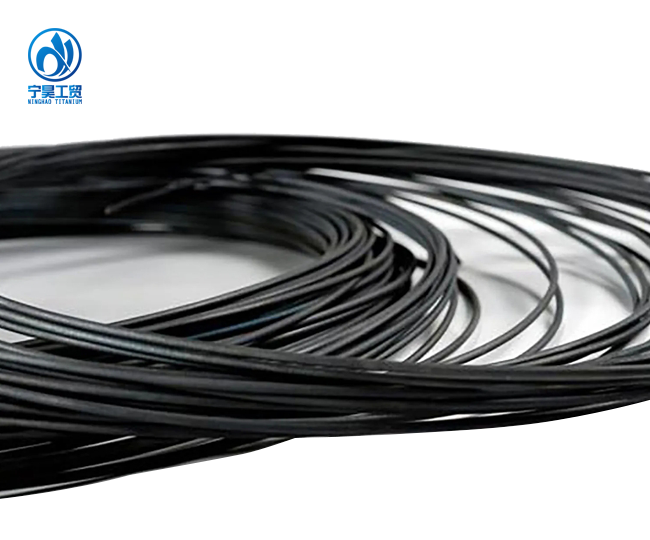 VIEW MOREMMO titanium wire anode
_1768204149266.webp) VIEW MOREelectroplating titanium anode
VIEW MOREelectroplating titanium anode_1768298165832.webp) VIEW MOREMMO Anode for Zinc Electrowinning Cell
VIEW MOREMMO Anode for Zinc Electrowinning Cell_1768361974486.webp) VIEW MOREplatinized titanium for anodizing
VIEW MOREplatinized titanium for anodizing_1770191266369.webp) VIEW MORETitanium Anode with lridium oxide for Chromium Plating
VIEW MORETitanium Anode with lridium oxide for Chromium Plating_1768898457272.webp) VIEW MOREElectrolytic acid-base ionized water electrode sheet
VIEW MOREElectrolytic acid-base ionized water electrode sheet_1768534006149.webp) VIEW MOREMMO(Ru02) Coated Titanium Electrode for Degradationand Decolorization
VIEW MOREMMO(Ru02) Coated Titanium Electrode for Degradationand Decolorization