




The Future of Corrosion Protection: Why Flexible Linear Anodes Are the Answer
Corrosion protection is a key concern for many industries. These include oil and gas, marine infrastructure, and water treatment. As technology improves, new solutions are being developed to fight corrosion more effectively. Among these new technologies, flexible linear anodes stand out. This article explains why flexible linear anodes may become the future of corrosion protection.
The Evolution of Corrosion Protection Technologies
Corrosion has been a problem for engineers for a long time. Traditional methods include painting, sacrificial anodes, and impressed current systems. These methods have worked well in many cases, but they also have limits. They can be expensive, need a lot of maintenance, and sometimes do not work well in complex environments.
Flexible linear anodes offer a new solution. They solve many of the problems found in older methods. These anodes are designed to fit different shapes and structures. They provide even and complete protection, even in difficult conditions.
Flexible linear anodes are based on the same idea as impressed current cathodic protection (ICCP) systems. But their design and materials make them more useful and efficient. They send protective current along the full length of the anode. This gives more uniform protection and lowers the risk of localized corrosion. It also helps assets last longer.
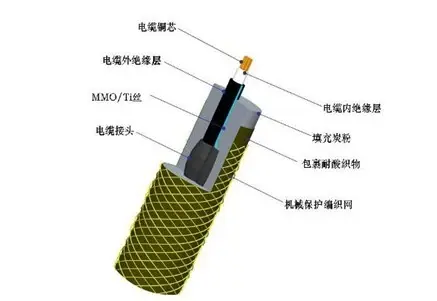
Advantages of Flexible Linear Anodes
Flexible linear anodes have many benefits compared to older methods:
Adaptability to Complex Shapes
A major benefit is that flexible linear anodes can fit irregular shapes and surfaces. This makes them good for protecting pipelines, offshore structures, and other assets with complex shapes. Rigid anodes may leave gaps in protection. Flexible anodes give full coverage, even in hard-to-reach places.
Uniform Current Distribution
The linear design gives a more even spread of protective current along the whole structure. This lowers the risk of hot spots or weak spots, which can happen with point anodes.
Easy to Install
Flexible linear anodes are usually easier and faster to install than older systems. They are light and can bend. This makes them easy to move and put in place. It reduces installation time and cost. This is especially helpful in remote or offshore locations.
Low Maintenance
Once installed, flexible linear anodes need less maintenance. Their strong design and even current flow give them a long working life. This means fewer replacements and less downtime.
Environmentally Friendly
Many flexible linear anodes are made with materials that are safe for the environment. They also use less power than some older ICCP systems. This fits with the growing need for sustainable industrial operations.
Cost-Effective
The upfront cost may be higher than some older methods. But over time, flexible linear anodes save money. They need less maintenance, last longer, and protect better. This leads to lower total cost over the life of the asset.
Applications of Flexible Linear Anodes
Flexible linear anodes can be used in many different industries:
Oil and Gas Industry
On offshore platforms, subsea pipelines, and onshore facilities, these anodes give good protection against seawater and harsh chemicals. Their ability to fit complex pipe shapes is very useful in this industry.
Marine Infrastructure
Ports, harbors, and coastal structures benefit from flexible anodes. They can be easily installed on pilings, jetties, and other marine structures. They give long-lasting protection against the corrosive marine environment.
Water Treatment Facilities
In water and wastewater plants, flexible linear anodes protect tanks, pipelines, and other key equipment. This helps these facilities last longer and stay safe.
Bridges and Highways
Flexible linear anodes can protect reinforced concrete structures like bridge decks and support columns. These structures are often damaged by de-icing salts and weather. Flexible anodes offer a good solution.
Underground Structures
Buried pipelines, storage tanks, and other underground structures can also benefit from flexible anodes. They can be installed during new construction or added later to older assets.
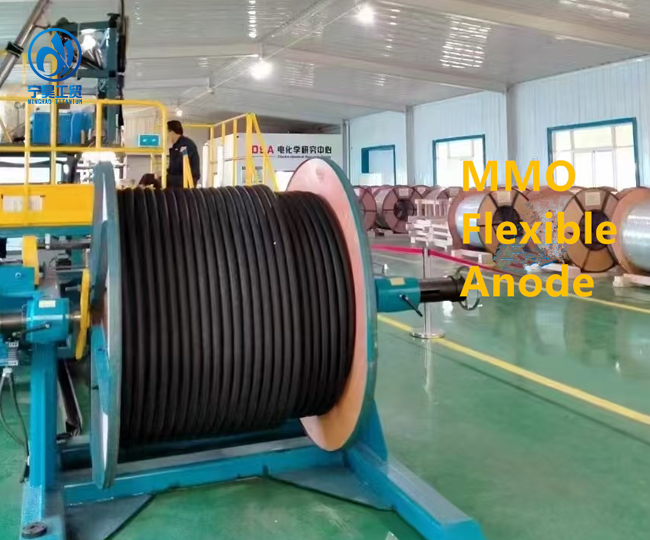
The Future of Corrosion Protection
As industries focus more on asset life, efficiency, and sustainability, more companies will use flexible linear anodes. Ongoing research and development will likely lead to better materials and designs. This will make these anodes even more useful.
The future of corrosion protection lies in technologies that are complete, efficient, and sustainable. Flexible linear anodes have all these qualities. They will likely become a key part of next-generation corrosion protection. As infrastructure gets older and working conditions become harder, flexible linear anodes offer a promising way forward.
Conclusion
Flexible linear anodes are a major step forward in corrosion protection. They give uniform, adaptable, and efficient protection. This helps keep important assets safe in many industries. As we look to the future, the growth and use of flexible linear anodes will help make infrastructure last longer, stay safer, and be more sustainable.
To learn more about flexible linear anodes and other advanced corrosion protection solutions, please contact BAOJI NINGHAO INDUSTRY AND TRADE CO., LTD. at sales02@nh-ti.com.
References
1. Baeckmann, W. V., Schwenk, W., & Prinz, W. (1997). Handbook of Cathodic Corrosion Protection: Theory and Practice of Electrochemical Protection Processes. Gulf Professional Publishing.
2. Revie, R. W., & Uhlig, H. H. (2008). Corrosion and Corrosion Control: An Introduction to Corrosion Science and Engineering. John Wiley & Sons.
3. Roberge, P. R. (2000). Handbook of Corrosion Engineering. McGraw-Hill Education.
4. Shreir, L. L., Jarman, R. A., & Burstein, G. T. (1994). Corrosion: Metal/Environment Reactions. Butterworth-Heinemann.
5. Cicek, V., & Al-Numan, B. (2011). Corrosion Chemistry. John Wiley & Sons.
YOU MAY LIKE
_1767855535474.webp) VIEW MOREelectroplating titanium electrode
VIEW MOREelectroplating titanium electrode VIEW MOREtitanium electrodes
_1767945649800.webp) VIEW MOREtitanium electrode anode
VIEW MOREtitanium electrode anode VIEW MOREanodizing titanium cathode
_1755237342167.webp) VIEW MOREmmo coated titanium anodes
VIEW MOREmmo coated titanium anodes_1755237855339.webp) VIEW MOREMMO Anode for Copper Plating of Printed Circut Boards
VIEW MOREMMO Anode for Copper Plating of Printed Circut Boards_1768550156531.webp) VIEW MORERuthenium Oxide Titanium Anode for Paper WastewaterElectrochemical Treatment
VIEW MORERuthenium Oxide Titanium Anode for Paper WastewaterElectrochemical Treatment_1768808990119.webp) VIEW MORETitanium Anode for Treatment of Landfill Leachate
VIEW MORETitanium Anode for Treatment of Landfill Leachate