




Flexible Linear Anodes vs. Rigid Anodes: How to Choose?
In the field of electrochemistry and industrial applications, the choice of anode type directly affects process efficiency and operational results. As industries continue to seek innovative and cost-effective solutions, understanding the differences between flexible linear anodes and rigid anodes becomes increasingly important. This article compares their characteristics, advantages, and applicable scenarios to help you make an appropriate choice based on your specific needs.
Basic Concepts of Flexible Linear Anodes and Rigid Anodes
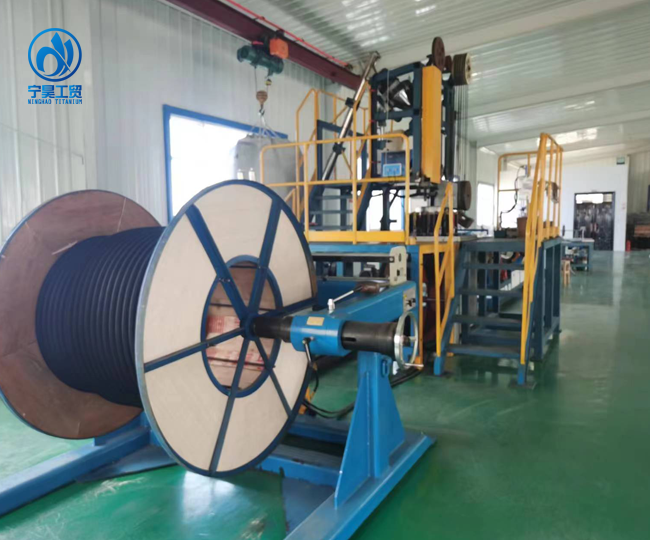
Flexible linear anodes are pliable electrodes that can be shaped or bent according to installation requirements. These anodes are typically made by coating Mixed Metal Oxides (MMO) onto a flexible titanium substrate. Rigid anodes, in contrast, are solid electrodes with fixed shapes, commonly made from materials such as platinized titanium, lead dioxide, and other dimensionally stable anodes (DSA).
The pliability of flexible linear anodes allows them to adapt to complex structures that traditional rigid anodes may have difficulty accommodating. This characteristic has practical value in applications such as water treatment and cathodic protection. As application scenarios become more diverse, flexible anodes are gaining attention in various industries due to their installation flexibility and structural adaptability.
Performance and Durability Comparison
In terms of performance, each type of anode has its own characteristics. Flexible linear anodes excel in achieving uniform current distribution. Their ability to conform to irregular surfaces or wrap around structures helps achieve more even current distribution, which is particularly useful in scenarios such as pipeline cathodic protection and complex metal structure protection.
While rigid anodes may lack the adaptability of flexible anodes, they demonstrate reliable durability in harsh environments. Their solid construction provides good resistance to high temperatures and aggressive chemicals, making them a common choice in electrochemical processes operating under extreme conditions.
With advances in materials science, the durability of flexible linear anodes continues to improve. Modern flexible anodes, through improved coatings and substrate materials, offer enhanced service life and wear resistance, making them increasingly viable alternatives in applications traditionally dominated by rigid anodes.
Installation and Maintenance Considerations
Flexible linear anodes offer notable advantages in installation convenience. Their pliable design allows for integration into existing structures or systems without requiring major modifications. This feature is particularly practical in retrofit projects or spaces with limited access, helping to reduce installation time and construction costs.
In terms of maintenance, flexible linear anodes also offer certain benefits. Their removable and inspectable nature makes replacement and maintenance operations more convenient, helping to reduce system downtime and lower long-term maintenance costs. Although rigid anodes may require less frequent maintenance due to their solid construction, replacement operations tend to be more complex and time-consuming when needed.
The choice of anode type can also influence the overall design of electrochemical systems. Flexible linear anodes, with their formability, help achieve more compact spatial layouts, offering practical value in applications with limited installation space.
Conclusion
Choosing between flexible linear anodes and rigid anodes depends on the specific requirements of each application. Factors to consider include operating environment, current distribution needs, installation conditions, and long-term maintenance. Flexible linear anodes, with their installation convenience and structural adaptability, are advantageous in scenarios requiring uniform current distribution or complex installation spaces, suitable for cathodic protection systems, water treatment facilities, and certain electroplating processes.
Rigid anodes, with their structural stability and durability in harsh environments, remain a common choice for high-temperature and highly corrosive applications. As material technology continues to advance, the distinction between flexible and rigid anodes is becoming less pronounced, with new materials and hybrid solutions offering options for a broader range of application scenarios.
For professional advice tailored to your specific application needs, please contact BAOJI NINGHAO INDUSTRY AND TRADE CO., LTD.: sales02@nh-ti.com
References
1. Chinese Society for Corrosion and Protection. (2023). Technical Specifications for Anode Materials in Cathodic Protection.
2. BAOJI NINGHAO Technology Center. (2024). Research on the Performance of Flexible Linear Anodes Under Different Operating Conditions.
3. National Chemical Standardization Technical Committee. (2023). Technical Requirements for Anode Materials in Electrochemical Applications.
4. Corrosion Science. (2024). Performance evaluation of flexible and rigid anodes in industrial applications.
5. Electrochimica Acta. (2023). Advances in anode technology for electrochemical processes.
YOU MAY LIKE
_1767772153491.webp) VIEW MOREtitanium electrodes in electrolysis
VIEW MOREtitanium electrodes in electrolysis_1767945649800.webp) VIEW MOREtitanium electrode anode
VIEW MOREtitanium electrode anode_1768204699909.webp) VIEW MOREelectrolytic anodize titanium
VIEW MOREelectrolytic anodize titanium_1755236992436.webp) VIEW MOREtitanium anodes
VIEW MOREtitanium anodes_1768295869605.webp) VIEW MORETitanium Anode with MMO coating for Copper Electrowinning Cell
VIEW MORETitanium Anode with MMO coating for Copper Electrowinning Cell_1769415524328.webp) VIEW MOREPlatinized Titanium mesh anode
VIEW MOREPlatinized Titanium mesh anode_1769069244861.webp) VIEW MORETitanium anode for sodium hypochlorite electrolysis
VIEW MORETitanium anode for sodium hypochlorite electrolysis_1770023968475.webp) VIEW MORElridium Coated Titanium Anode for PCB Reverse Pulse Copper Plating
VIEW MORElridium Coated Titanium Anode for PCB Reverse Pulse Copper Plating