




Why Titanium Electrodes Are More Effective Than Other Materials
In the field of electrochemistry, the choice of electrode material directly affects the efficiency and effectiveness of various processes. Among various electrode materials, titanium electrodes have demonstrated good suitability in applications such as electrolysis due to their performance characteristics. This article analyzes the advantages of titanium electrodes compared to other electrode materials.
Properties of Titanium in Electrochemical Applications
Titanium offers a good strength-to-weight ratio, corrosion resistance, and biocompatibility, and has been used in various industries. As an electrode material, titanium shows good durability and efficiency in electrochemical processes, maintaining stability in corrosive environments.
The corrosion resistance of titanium is one of its notable characteristics. Titanium naturally forms a stable oxide layer on its surface when exposed to air, providing protection and preventing further corrosion. This property makes titanium electrodes suitable for harsh chemical environments where materials such as graphite or stainless steel may degrade quickly.
Additionally, titanium has a relatively high melting point and low electrical resistance. These properties allow titanium electrodes to withstand relatively high temperatures and conduct electrical current effectively, making them suitable for various electrochemical applications including water treatment and metal recovery.
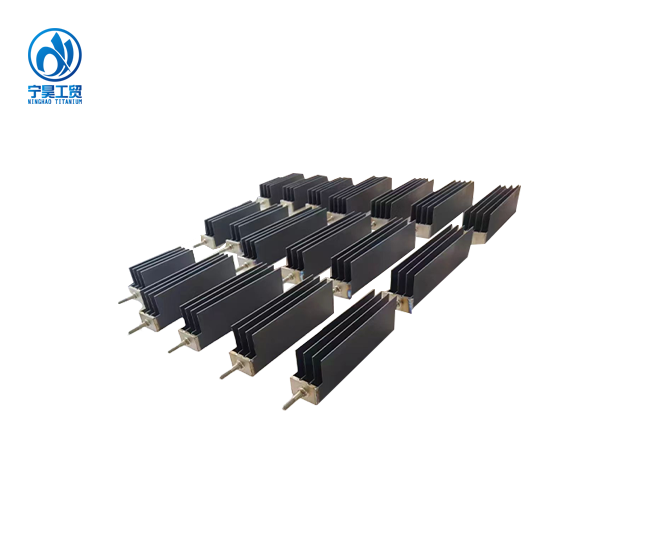
Performance Advantages of Titanium Electrodes in Electrolysis
In electrolysis processes, the corrosion resistance of titanium electrodes helps them maintain stability in corrosive electrolyte environments, extending service life and reducing maintenance requirements. Compared to traditional materials such as graphite or stainless steel, titanium electrodes offer good conductivity and stability.
Advantages of titanium electrodes in electrolysis processes include:
Durability: Corrosion resistance helps maintain structural integrity in corrosive electrolytes or processes that generate corrosive byproducts
Coating Capability: Titanium electrodes can be coated with catalytic materials such as ruthenium-iridium or platinum, forming dimensionally stable anodes with good catalytic activity and long-term stability
Shape Customization: Titanium electrodes can be manufactured in various shapes and sizes, allowing optimization of electrode geometry to improve current distribution and mass transfer efficiency
Environmental and Economic Benefits
The use of titanium electrodes in electrolysis and other electrochemical processes offers certain environmental and economic advantages:
Environmental Benefits
Reduced release of harmful byproducts
Lower waste generation
In advanced oxidation processes, can generate strong oxidants such as ozone or hydroxyl radicals directly in water, effectively degrading refractory organic pollutants while reducing chemical additives
Economic Benefits
Extended service life reduces replacement frequency
Lower maintenance requirements reduce operating costs
Improved process efficiency may help increase product yield or reduce energy consumption
Conclusion
Titanium electrodes offer good overall performance in electrochemical applications, particularly in electrolysis processes, due to their corrosion resistance, durability, and versatility. As industries continue to seek efficient and sustainable solutions, the application of titanium electrodes is expected to expand further.
For more information about titanium electrodes, please contact BAOJI NINGHAO INDUSTRY AND TRADE CO., LTD.: sales02@nh-ti.com
References
1. Chen, X., & Mao, S. S. (2007). Titanium dioxide nanomaterials: synthesis, properties, modifications, and applications. Chemical Reviews, 107(7), 2891-2959.
2. Martínez-Huitle, C. A., & Ferro, S. (2006). Electrochemical oxidation of organic pollutants for the wastewater treatment: direct and indirect processes. Chemical Society Reviews, 35(12), 1324-1340.
3. Panizza, M., & Cerisola, G. (2009). Direct and mediated anodic oxidation of organic pollutants. Chemical Reviews, 109(12), 6541-6569.
4. Kraft, A. (2007). Doped diamond: a compact review on a new, versatile electrode material. International Journal of Electrochemical Science, 2(5), 355-385.
5. Trasatti, S. (2000). Electrocatalysis: understanding the success of DSA®. Electrochimica Acta, 45(15-16), 2377-2385.