




Why Grade 1 Titanium Electrodes Are Ideal for Industrial Processes
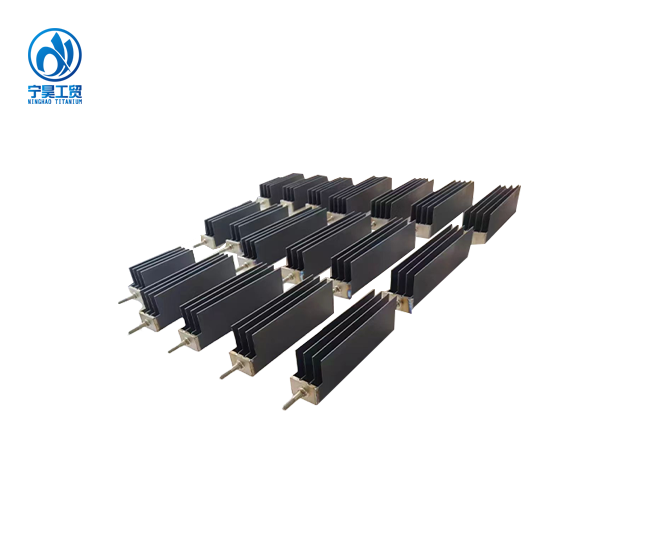
In the field of industrial electrochemistry, the choice of electrode material directly affects process efficiency, equipment life, and operating costs. Grade 1 industrial pure titanium is often used as the base material for coated electrodes. With its good corrosion resistance and the added performance from surface coatings, finished electrodes made with Grade 1 titanium have become a preferred choice in many industrial applications. This article analyzes the main advantages of industrial electrodes made from Grade 1 titanium, focusing on corrosion resistance, electrochemical performance, and environmental compatibility.
Excellent Corrosion Resistance and Durability
One of the key features of Grade 1 titanium is its excellent corrosion resistance. In industrial environments, electrodes often come into contact with corrosive chemicals and electrolytes. The corrosion resistance of the base material is critical for the long-term stability of the finished electrode. Grade 1 titanium is a high-purity industrial pure titanium. It shows good corrosion resistance in most common acid, alkali, and salt electrolyte environments. Only in a few special corrosive conditions, such as hydrofluoric acid or high-temperature concentrated acids, does it experience corrosion loss.
This corrosion resistance comes from the stable and self-repairing oxide layer that naturally forms on the titanium surface. This oxide layer is composed of titanium dioxide and lower-valent titanium oxides. It acts as a barrier, preventing direct contact between corrosive media and the titanium base metal. As a result, coated electrodes made with Grade 1 titanium keep their structural integrity and stable performance in typical harsh electrolyte conditions. The service life of these finished electrodes is generally better than that of traditional electrode materials like graphite or lead. However, bare titanium is only suitable for use as a cathode and cannot be used as an industrial anode for long periods.
The excellent durability from the Grade 1 titanium base enables finished electrodes to deliver a longer continuous service life. Traditional lead or graphite electrodes are easily corroded by the electrolyte and lose performance quickly. They often need to be replaced frequently. In contrast, finished electrodes with a Grade 1 titanium base can work stably for years in continuous production. This feature not only reduces maintenance downtime but also lowers the total lifecycle cost of electrochemical processes.
In addition, the Grade 1 titanium base can handle common mechanical stress and temperature changes in industrial environments. It has good dimensional stability within the usual temperature and pressure ranges. However, because pure titanium has relatively low hardness, its wear resistance is limited in extreme conditions with abrasion from solid particulate matter. But under normal production conditions, it ensures stable and reliable performance throughout the service life of the electrode.
Electrochemical Performance and Efficiency Improvement
Besides the physical durability from the base material, finished electrodes made from Grade 1 titanium also offer strong advantages in electrochemical performance. Grade 1 titanium is a good base material for various electrocatalytic coatings. After surface pretreatment such as sandblasting or etching, it can firmly hold functional catalytic layers. This allows customized electrode systems for specific industrial applications.
Once a special catalytic coating is added to the titanium surface, the finished electrode has a wide electrochemical window. It can operate stably over a broad potential range without suffering from base corrosion or a sharp increase in side reactions. This feature is especially important in processes that need high anodic or cathodic potentials, such as water electrolysis, chlor-alkali production, and electroplating.
Grade 1 pure titanium has higher electrical resistivity than conductive materials like copper or graphite. The energy saving benefit of finished electrodes does not come from the conductivity of the base material. Instead, the catalytic coating on the electrode surface greatly reduces the overpotential of the electrolysis reaction. Combined with the corrosion resistance, good shape stability, and low contact loss of the titanium base, this helps reduce energy loss in electrochemical processes. It enables more efficient electron transfer, lowers system energy use, and improves overall process efficiency. This energy saving feature not only cuts operating costs for companies but also aligns with industrial green production and sustainability goals.
The surface of Grade 1 titanium can be further improved by surface modification or coating to optimize electrode catalytic performance. Common coatings in the industry include mixed metal oxides (MMO) and precious metals such as platinum or iridium. These functional coatings greatly improve the catalytic activity and reaction selectivity of the electrode for target electrochemical reactions. They help production achieve higher raw material conversion rates and purer products.
The combination of good corrosion resistance from the base material and electrochemical advantages from the coating makes Grade 1 titanium based finished electrodes suitable for many industrial applications. They are widely used in industrial wastewater treatment, electrolysis for desalination, and the large-scale production of chlorine, hydrogen, and oxygen. They continue to add value by improving process efficiency and product quality.
Environmental Compatibility and Sustainability
With stricter environmental regulations, Grade 1 titanium based electrodes are growing in popularity across multiple industries because of their good environmental compatibility. Traditional electrodes made of lead can release toxic heavy metals into water and soil when they corrode. In contrast, the titanium base is biologically inert and does not leach toxic substances. As long as the electrode surface coating stays intact, the overall safety is excellent. This makes titanium based electrodes especially suitable for production fields with strict requirements for raw material purity and environmental safety, such as water treatment, food processing, and pharmaceutical manufacturing.
The long service life from the Grade 1 titanium base also brings clear environmental benefits. Longer electrode life greatly reduces replacement frequency, cuts solid waste generated from spent electrodes, and decreases the environmental load from producing new materials and disposing of old electrodes. This aligns with the concept of a circular economy and helps industries reduce their overall environmental footprint.
In addition, the energy savings achieved through coating catalysis on titanium electrodes directly reduce industrial power consumption. This indirectly lowers carbon emissions at the production end. As global industry moves toward low-carbon transformation and production decarbonization, the value of this technology continues to grow.
From a resource use perspective, Grade 1 titanium metal is recyclable. When an electrode reaches its designed service life, the titanium base can be reused. After removing the old coating, it can be reprocessed and coated with a new catalytic layer. This recycling saves mineral resources and reduces the need for raw titanium ore mining. It is an ideal material choice for sustainable industrial production.
Conclusion
Finished titanium electrodes made with Grade 1 industrial pure titanium as the base material offer combined advantages in base corrosion resistance, finished electrode electrochemical performance, and lifecycle environmental compatibility. They effectively improve production efficiency, equipment stability, and green sustainability in many types of electrochemical industries.
For more information about the selection and customization of Grade 1 titanium electrodes, please contact Baoji Ninghao Industry & Trade Co., Ltd. at sales02@nh-ti.com.
References
1. Johnson, R. T., & Smith, A. B. (2019). "Advancements in Titanium Electrode Technology for Industrial Applications." Journal of Electrochemical Engineering, 45(3), 287-301.
2. Chen, X., Wang, Y., & Li, H. (2020). "Comparative Study of Grade 1 Titanium Electrodes in Harsh Chemical Environments." Corrosion Science, 158, 108-120.
3. Patel, S., & Nguyen, T. (2018). "Energy Efficiency Improvements in Electrochemical Processes Using Grade 1 Titanium Electrodes." Industrial & Engineering Chemistry Research, 57(42), 13950-13965.
4. Yamamoto, K., & García-Meza, J. V. (2021). "Environmental Impact Assessment of Titanium Electrode Usage in Water Treatment Facilities." Water Research, 195, 116989.
5. Fernández-González, C., & Martínez-Huitle, C. A. (2022). "Long-term Performance Evaluation of Grade 1 Titanium Electrodes in Chlor-alkali Production." Electrochimica Acta, 410, 140098.