




Titanium Electrodes: A Preferred Material for Corrosion-Resistant Electrochemical Processes
In the field of electrochemistry, the choice of electrode material directly affects process efficiency, equipment lifespan, and operating costs. Titanium electrodes have become a common choice in various industrial applications due to their corrosion resistance and versatility. This article introduces the key characteristics of titanium electrodes and their advantages in corrosion-resistant electrochemical processes.
Corrosion Resistance of Titanium Electrodes
Titanium electrodes have gained attention in the electrochemical industry primarily due to their corrosion resistance. When exposed to oxygen, titanium forms a stable passive oxide layer on its surface. This naturally formed protective layer effectively isolates the base metal from corrosive media.
The corrosion resistance of titanium electrodes is particularly suitable for the following operating conditions:
Electrolytes containing corrosive chemicals
High-temperature operating environments
Extreme pH conditions
In industries such as chlor-alkali production, water treatment, and metal surface finishing, the durability of titanium electrodes helps maintain process stability and reduce maintenance requirements.
Additionally, the corrosion resistance of titanium electrodes helps maintain product purity in electrochemical processes. Unlike less noble metals that may corrode and contaminate the electrolyte or final product, titanium maintains its structural integrity, helping to ensure consistent output quality. This characteristic is particularly valuable in industries such as pharmaceutical manufacturing and high-purity chemical production, where purity requirements are stringent.
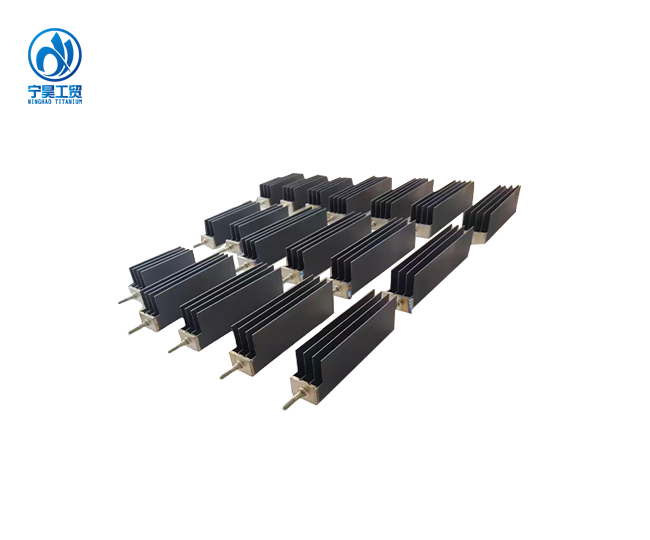
Versatility and Customization
Another advantage of titanium electrodes is their versatility across different electrochemical processes. The titanium substrate can be coated with various materials to enhance catalytic properties or customize performance for specific applications. This flexibility makes titanium electrodes suitable for applications in energy storage, water treatment, and other fields.
Mixed Metal Oxide (MMO) coatings are a common modification for titanium electrodes. Precious metal oxide coatings such as ruthenium, iridium, and platinum can improve the catalytic activity of titanium electrodes while maintaining their corrosion resistance. This coating system has applications in chlorine production and water treatment processes.
Customization of titanium electrodes extends beyond coatings. Manufacturers can optimize the shape, size, and surface area of electrodes according to process requirements. This design flexibility allows titanium electrodes to adapt to various application scenarios, from large-scale industrial electrolysis to specialized laboratory experiments.
Long-Term Cost Effectiveness and Sustainability
While the initial cost of titanium electrodes may be higher than some alternative materials, their long-term cost effectiveness is notable. The durability and corrosion resistance of titanium electrodes provide a relatively long service life, reducing replacement frequency and downtime.
Benefits of extended service life include:
Reduced direct replacement costs
Lower indirect expenses related to maintenance and process interruptions
Improved reliability in continuous operations such as wastewater treatment and chemical manufacturing
The use of titanium electrodes also aligns with sustainability trends. Their durability reduces waste generated from electrode replacements, while their efficiency in electrochemical processes helps lower energy consumption and improve resource utilization. As environmental regulations become increasingly stringent, adopting titanium electrodes represents a forward-looking approach.
The recyclability of titanium further enhances its sustainability profile. At the end of their service life, titanium electrodes can be recycled, recovering valuable materials and reducing the environmental impact of electrochemical processes.
Conclusion
Titanium electrodes offer advantages in corrosion resistance, versatility, and long-term cost effectiveness, making them valuable in various industries. As electrochemical technology continues to play an increasingly important role in addressing global challenges, the importance of titanium electrodes is expected to grow.
For more information about titanium electrodes, please contact BAOJI NINGHAO INDUSTRY AND TRADE CO., LTD.: sales02@nh-ti.com
References
1. Trasatti, S. (2000). Electrocatalysis: understanding the success of DSA®. Electrochimica Acta, 45(15-16), 2377-2385.
2. Koziol, J., & Handzlik, P. (2021). Titanium-Based Anodes for Electrochemical Wastewater Treatment: A Comprehensive Review. Materials, 14(4), 877.
3. Chen, X., Chen, G., & Yue, P. L. (2001). Stable Ti/IrOx-Sb2O5-SnO2 anode for O2 evolution with high oxygen evolution efficiency. The Journal of Physical Chemistry B, 105(20), 4623-4628.
4. Martínez-Huitle, C. A., & Ferro, S. (2006). Electrochemical oxidation of organic pollutants for the wastewater treatment: direct and indirect processes. Chemical Society Reviews, 35(12), 1324-1340.
5. Panizza, M., & Cerisola, G. (2005). Application of diamond electrodes to electrochemical processes. Electrochimica Acta, 51(2), 191-199.