




The Corrosion Resistance Benefits of Platinum-Coated Titanium Mesh Anodes
In the fields of electrochemistry and industrial applications, the corrosion resistance of materials directly affects equipment service life and operational efficiency. Platinum-coated titanium mesh anodes, due to their structure and material properties, offer certain advantages in corrosive environments. This article introduces the corrosion resistance of these anodes and their applications in relevant fields.
Combination of Platinum and Titanium: Synergistic Effect on Corrosion Resistance
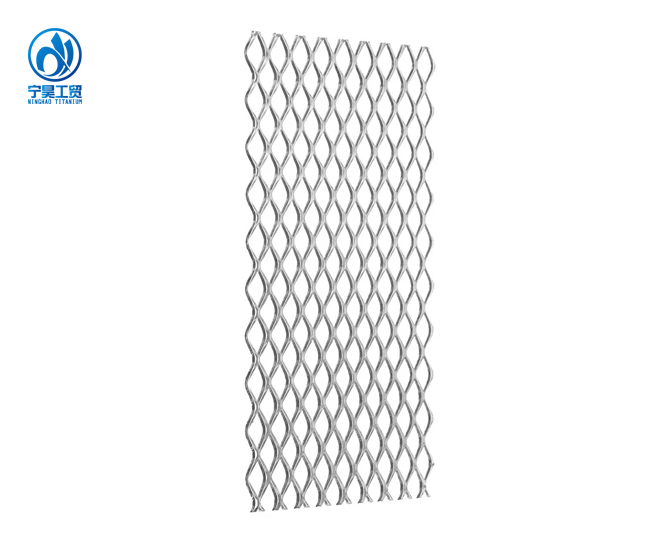
Platinum-coated titanium mesh anodes consist of a titanium mesh substrate and a surface platinum coating. Titanium has a good strength-to-weight ratio and corrosion resistance, making it a common base material for anodes. Platinum is a precious metal with stable chemical properties and strong oxidation resistance, making it suitable as a protective layer for the titanium substrate.
The platinum coating is applied to the titanium mesh surface through techniques such as electrodeposition or physical vapor deposition, forming a uniform and adherent protective layer. This coating not only protects the underlying titanium substrate but also provides good electrochemical performance to the anode.
Platinum-coated titanium mesh anodes combine the mechanical strength of titanium with the chemical stability of platinum, offering durability in corrosive environments.

Performance in Corrosive Electrochemical Environments
Platinum-coated titanium mesh anodes demonstrate good stability in various corrosive environments. In industries such as chemical processing, water treatment, and metal finishing, where equipment and materials frequently come into contact with corrosive substances, these anodes offer certain advantages.
Chlorine Production
In the chlor-alkali process, brine electrolysis creates a highly corrosive environment. Platinum-coated titanium mesh anodes remain stable under these conditions, maintaining their performance and structural integrity.
Water Treatment
In processes such as electrochlorination for disinfection and electrooxidation for pollutant removal, platinum-coated titanium mesh anodes provide stable performance. Their corrosion resistance helps water treatment systems operate reliably, reducing maintenance and downtime.
Acidic and Alkaline Environments
In the metal finishing industry, electroplating baths can be highly corrosive. Platinum-coated titanium mesh anodes maintain their electrochemical performance in strong acid or alkaline conditions, helping to maintain plating quality and reduce anode replacement frequency.
Additional Advantages of the Mesh Structure
The open structure of platinum-coated titanium mesh anodes facilitates mass transfer, reduces concentration polarization, and improves electrochemical efficiency. This design also helps current distribute more evenly across the electrode surface, leading to more consistent reactions and improved product quality.
Long-Term Economic and Environmental Benefits
While the initial cost of platinum-coated titanium mesh anodes may be higher than some alternatives, their long-term economic benefits are significant. Their good durability and corrosion resistance help reduce maintenance costs and replacement frequency.
In industrial environments, equipment downtime can cause significant economic losses. The reliability of platinum-coated titanium mesh anodes means less frequent system shutdowns for electrode replacement or maintenance, helping to improve productivity and profitability.
From an environmental perspective, the long service life of these anodes reduces waste generation from material replacement, aligning with sustainability goals and reducing environmental footprint. Additionally, the high efficiency of these anodes in electrochemical processes can help reduce energy consumption and improve process yields, further contributing to environmental conservation.
The wide applicability of platinum-coated titanium mesh anodes allows them to perform effectively across various applications, enabling industries to standardize on a single high-performance electrode material for multiple processes. This standardization can lead to simplified inventory management, reduced training requirements, and more streamlined procurement processes.
In applications such as electroplating, the uniform current distribution provided by these anodes helps improve coating quality and consistency, enhancing product quality and market competitiveness.
Conclusion
Platinum-coated titanium mesh anodes offer certain advantages in corrosion resistance. They combine the mechanical strength of titanium with the chemical stability of platinum, making them suitable for corrosive environments such as chemical processing, water treatment, and metal finishing. In the long term, these anodes also provide economic and environmental benefits.
For more information about platinum-coated titanium mesh anodes, please contact BAOJI NINGHAO INDUSTRY AND TRADE CO., LTD.: sales02@nh-ti.com
References
Kraft, A. (2007). Doped diamond: A compact review on a new, versatile electrode material. International Journal of Electrochemical Science, 2(5), 355-385.
Chen, X., Chen, G., & Yue, P. L. (2001). Novel electrode system for electroflotation of wastewater. Environmental Science & Technology, 35(10), 2026-2032.
Trasatti, S. (2000). Electrocatalysis: understanding the success of DSA®. Electrochimica Acta, 45(15-16), 2377-2385.
Martínez-Huitle, C. A., & Ferro, S. (2006). Electrochemical oxidation of organic pollutants for the wastewater treatment: direct and indirect processes. Chemical Society Reviews, 35(12), 1324-1340.
Comninellis, C., & Chen, G. (Eds.). (2010). Electrochemistry for the Environment. Springer Science & Business Media.