




Polymer Flexible Anodes: What Makes Them Unique
Against the backdrop of continuous development in electrochemical technology, polymer flexible anodes are becoming a noteworthy innovation. These components combine flexibility, durability, and electrochemical performance, showing application potential in fields such as wearable electronics, energy storage, and environmental remediation. This article introduces the structural characteristics, key advantages, and application prospects of polymer flexible anodes.
Structure and Composition of Polymer Flexible Anodes
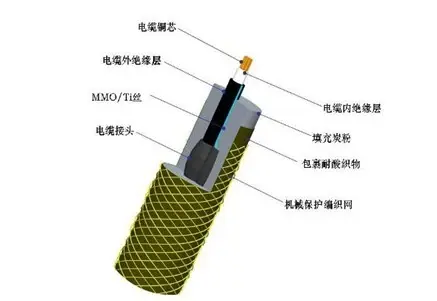
Polymer flexible anodes represent a direction of development in electrode technology. Unlike traditional rigid anodes, these anodes are constructed using a combination of conductive polymers and flexible substrates, offering good adaptability in electrochemical applications.
At the core of a polymer flexible anode is the conductive polymer matrix. Conductive polymers such as polyaniline (PANI), polypyrrole (PPy), and poly(3,4-ethylenedioxythiophene) (PEDOT) are specially designed to facilitate electron transfer while maintaining flexibility. The specific arrangement of polymer chains allows them to maintain conductivity during bending and stretching.
The flexible substrate, typically made from materials such as polyethylene terephthalate (PET) or polyimide, provides mechanical support for the conductive polymer layer and contributes to the overall flexibility of the anode. This combination of materials allows the electrode to conform to different shapes and maintain stable performance after repeated bending.
Additionally, the surface of polymer flexible anodes can be modified with functional groups or nanoparticles to enhance specific properties such as catalytic activity or ion selectivity. This customization capability allows them to adapt to different application requirements.
Advantages and Applications of Polymer Flexible Anodes
The unique properties of polymer flexible anodes make them valuable in several fields:
Conformability to Irregular Surfaces
In wearable electronics and biomedical devices, polymer flexible anodes can be integrated into skin-adhering sensors that bend with body movement, providing continuous data collection while maintaining wearing comfort.
Energy Storage
In the development of batteries and supercapacitors, polymer flexible anodes can be used to manufacture thin, lightweight, and even rollable energy storage devices. This characteristic is particularly important for portable electronic devices and electric vehicles where space and weight are key considerations.
Aerospace and Automotive
Polymer flexible anodes can be integrated into curved or complex surfaces, achieving aerodynamic designs without compromising electrochemical functionality, helping improve fuel efficiency and performance.
Environmental Applications
In water treatment systems, polymer flexible anodes can be shaped to fit different reactor designs, helping achieve more efficient and compact water purification solutions.
Research Progress and Future Directions
Research in the field of polymer flexible anodes continues to advance:
Self-Healing Anodes
Researchers are developing self-healing polymer flexible anodes capable of repairing minor damage autonomously, which may extend the service life and reliability of the anodes.
Integration with Other Technologies
Combining polymer flexible anodes with technologies such as printed electronics could enable the production of large-area, fully flexible electronic devices, with potential applications in display technology and other fields.
Energy Harvesting Systems
Integrating polymer flexible anodes into piezoelectric or triboelectric generators could create efficient flexible devices that convert mechanical energy from body movements or environmental vibrations into electrical energy.
Nanomaterial Enhancement
Carbon-based nanomaterials such as graphene are being studied to further improve the conductivity and mechanical properties of polymer flexible anodes.
Conclusion
Polymer flexible anodes offer characteristics in flexibility, durability, and electrochemical performance, with application potential in wearable electronics, energy storage, environmental remediation, and other fields. As materials science and manufacturing processes continue to advance, the application range of these anodes is expected to expand further.
For more information about polymer flexible anodes, please contact BAOJI NINGHAO INDUSTRY AND TRADE CO., LTD.: sales02@nh-ti.com
References
1. Zhang, L., & Wang, X. (2020). "Advancements in Polymer Flexible Anodes for Next-Generation Energy Storage Devices." Journal of Materials Chemistry A, 8(15), 7479-7495.
2. Chen, Y., et al. (2019). "Flexible Anodes for Wearable Bioelectronics: Current Status and Future Perspectives." Advanced Materials, 31(39), 1902622.
3. Liu, J., & Zhang, Q. (2021). "Self-Healing Polymer Flexible Anodes: A Review of Recent Progress and Future Directions." Energy & Environmental Science, 14(3), 1384-1408.
4. Ramakrishna, S., et al. (2018). "Polymer Flexible Anodes in Environmental Applications: A Comprehensive Review." Environmental Science: Water Research & Technology, 4(8), 1088-1110.
5. Wang, H., & Guo, L. (2022). "Nanostructured Polymer Flexible Anodes for Advanced Energy Harvesting Systems." Nano Energy, 93, 106828.