




How Do Titanium Electrodes Enhance Electroplating Process Performance?
Electroplating is a critical process spanning numerous industries from jewelry manufacturing to aerospace engineering. The quality and efficiency of electroplating largely depend on the materials used for electrodes and anodes. In recent years, titanium has emerged as a transformative material in this field, revolutionizing electroplating processes. This article delves into the applications of titanium electrodes in electroplating, analyzing their unique properties and the practical benefits they bring to various industries.
Unique Properties of Titanium in Electrochemical Applications
Titanium's exceptional characteristics make it an ideal choice for electrodes and anodes in electroplating processes. Its corrosion resistance, durability, and conductivity set it apart from traditional materials. Titanium electrodes can withstand harsh chemical environments, maintaining structural integrity and performance during long-term use.
Titanium's low atomic weight and high strength-to-weight ratio significantly enhance its efficiency in electrochemical reactions. These characteristics enable the design of lightweight yet robust electrodes, making them particularly suitable for large-scale industrial applications. In fields such as energy storage, aerospace, and automotive industries where weight and performance are critical, these advantages of titanium electrodes provide significant value for improving overall system efficiency and extending service life.
Furthermore, titanium's ability to form a stable oxide layer on its surface provides additional corrosion protection. This oxide layer can be further enhanced through various coating techniques, enabling the customization of specialized electrode products for specific electroplating requirements.
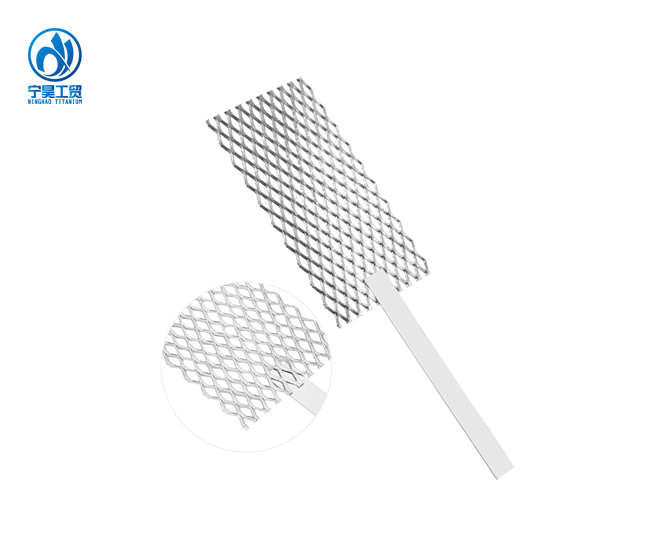
Efficiency Improvement and Durability Advantages in Electroplating Processes
The introduction of titanium electrodes has significantly enhanced the efficiency of electroplating processes. The material's excellent conductivity ensures uniform distribution of electric current across the workpiece surface, achieving more even and consistent coatings. This uniformity is crucial in industries with stringent precision and quality requirements, such as electronic component or medical device manufacturing.
Durability represents another outstanding advantage of titanium. Traditional electrode materials often degrade over time, leading to frequent replacements and production interruptions. In contrast, titanium electrodes demonstrate exceptional service life. Their wear resistance and corrosion resistance enable reliable long-term operation even in corrosive electrolyte environments. This extended lifespan translates to reduced maintenance costs and improved operational efficiency for electroplating facilities.
The stability of titanium in electrochemical processes ensures more precise control over plating parameters. Minimal electrode degradation means reduced variability, allowing operators to maintain stable conditions throughout the electroplating process. This stability is particularly valuable in applications requiring precise control over coating thickness, composition, and uniformity, such as manufacturing high-performance components for electronics, automotive, and aerospace industries.
Environmental and Economic Advantages of Titanium in Electroplating
Adopting titanium electrodes in electroplating processes brings significant environmental and economic benefits. From an environmental perspective, the long service life of titanium components reduces waste generated from frequent electrode replacements. Additionally, titanium's contamination resistance helps maintain electroplating solution purity, potentially reducing the frequency of solution replacement and associated chemical waste.
Economically, although the initial investment in titanium electrodes may be higher than traditional materials, long-term benefits often outweigh initial costs. The extended service life of titanium components reduces replacement frequency, lowering material costs and production downtime. Improvements in electroplating process efficiency and consistency can also lead to higher quality product output, potentially increasing the value of final products.
Furthermore, using titanium electrodes can enable more energy-efficient electroplating processes. Their superior conductivity and stability allow optimized current density, potentially reducing overall energy consumption in electroplating operations. This energy efficiency not only contributes to cost savings but also aligns with industry trends toward more sustainable manufacturing practices.
The flexibility of titanium as an electrode material has also opened new possibilities in electroplating. Specialized coating technologies further enhance titanium electrode performance, enabling electroplating of a broader range of materials and development of novel surface treatment processes, expanding electroplating applications across various industries.
Conclusion
The integration of titanium electrodes into electroplating processes represents a significant advancement in this field. Their unique properties offer a combination of durability, efficiency, and versatility unmatched by traditional materials. As industries continuously seek process improvements, environmental impact reduction, and product quality enhancement, the role of titanium in electroplating is expected to further strengthen.
To optimize electroplating operations or explore the potential of titanium electrodes, consulting domain experts is advisable. Professional teams specializing in advanced electrochemical materials can provide valuable insights and customized solutions. For more information about titanium electrode technology and how it can meet your specific application requirements, please contact the professional team at BAOJI NINGHAO INDUSTRY AND TRADE CO., LTD. Email: sales02@nh-ti.com.
The future of electroplating is promising, with titanium leading the way toward more efficient, sustainable, and higher-quality processes. As research and development in this field continue to advance, we anticipate seeing more innovative applications and improvements in electroplating technology, further consolidating titanium's position as a key material in this vital industrial process.
References
1. Kasem, K. K., & Jones, S. (2008). Platinum as a Reference Electrode in Electrochemical Measurements. Platinum Metals Review, 52(2), 100-106.
2. Walsh, F. C., & Ponce de León, C. (2014). A review of the electrodeposition of metal matrix composite coatings by inclusion of particles in a metal layer: an established and diversifying technology. Transactions of the IMF, 92(2), 83-98.
3. Chen, X., Chen, G., & Yue, P. L. (2001). Novel electrode system for electroflotation of wastewater. Environmental Science & Technology, 35(10), 2026-2032.
4. Kraft, A. (2007). Doped diamond: A compact review on a new, versatile electrode material. International Journal of Electrochemical Science, 2, 355-385.
5. Trasatti, S. (2000). Electrocatalysis: understanding the success of DSA®. Electrochimica Acta, 45(15-16), 2377-2385.
YOU MAY LIKE
_1755236491406.webp) VIEW MORETitanium anode plate for electrodeposition of non-ferrous metals
VIEW MORETitanium anode plate for electrodeposition of non-ferrous metals_1767942954366.webp) VIEW MOREelectrode anode titanium
VIEW MOREelectrode anode titanium_1767945345786.webp) VIEW MOREtitanium electrode for salt chlorinator
VIEW MOREtitanium electrode for salt chlorinator_1755237315243.webp) VIEW MOREanodic coating titanium
VIEW MOREanodic coating titanium VIEW MOREcustomized platinized titanium anode
_1769415524328.webp) VIEW MOREPlatinized Titanium mesh anode
VIEW MOREPlatinized Titanium mesh anode_1769757843718.webp) VIEW MORETitanium anode plates for copper recovery from electroplating wastewater
VIEW MORETitanium anode plates for copper recovery from electroplating wastewater_1768809598553.webp) VIEW MOREMMO Anode for Ammonia Removal
VIEW MOREMMO Anode for Ammonia Removal